Dublin: Armenia does not sign the European security declaration launched by France
- Published
- Place
- Dublin, Ireland
- Event date
- Past event —
Summary
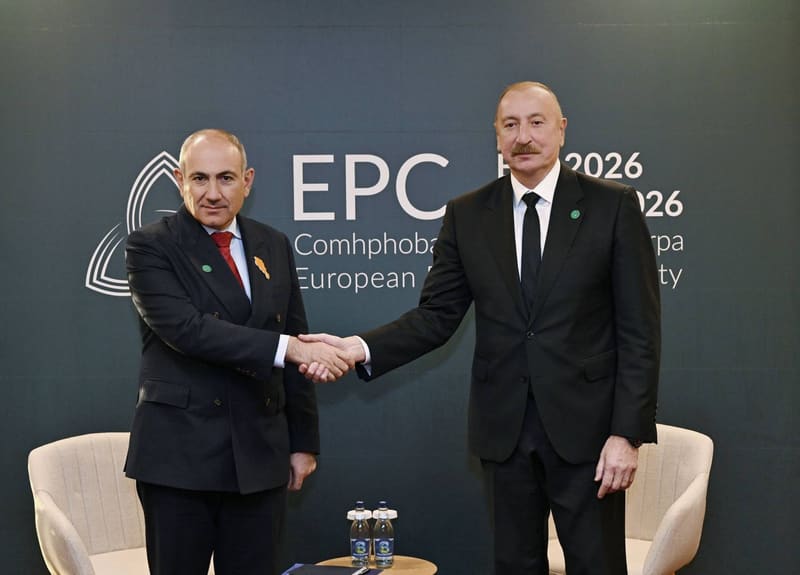
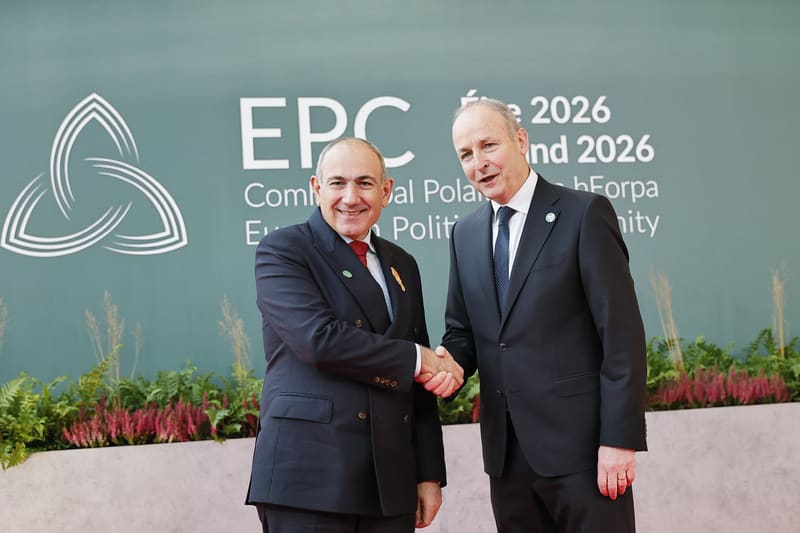
Armenia has not signed the “Declaration on key principles of European security”, adopted on 12 November in Dublin at the 9th summit of the European Political Community (EPC). The text, launched by France, has 41 signatories according to the list published by the Élysée, including Georgia, Moldova and Ukraine. It denounces the “unprovoked full-scale Russian aggression” against Ukraine and promises a joint response to hybrid attacks. Azerbaijan did not sign either: Baku rejects any document that creates “additional legal and political obligations”. Yerevan, for its part, has given no explanation. Asked by the news site Factor.am, the spokespeople for the prime minister and the foreign ministry had “no comment”. Yet Nikol Pashinyan was in Dublin, where he met Ilham Aliyev and received the backing of several European countries against Russian pressure.
The text is not legally binding. According to the US think tank CSIS, it sets out ten principles and thirteen common objectives. It recalls territorial integrity, the inviolability of borders and every state’s right to choose its alliances. It calls for “robust and credible” security guarantees for Kyiv. It also targets disinformation, cyberattacks, terrorism and trafficking.
Who signed, who is missing
The Élysée list has 41 states: the 27 EU countries, the United Kingdom, Norway, Iceland and Ukraine, but also Georgia, Moldova, Albania and Bosnia and Herzegovina. Armenia and Azerbaijan are not on it. Nor is Turkey. According to CSIS, Serbia and Switzerland also withheld their signatures.
Baku explained itself. For Aykhan Hajizada, the Azerbaijani foreign ministry spokesman, the EPC is “an informal dialogue platform”. Azerbaijan therefore joined none of the three documents adopted in Dublin, he said.
Yerevan’s silence
Factor.am asked why Armenia, which says it wants to join the European Union, had not signed. The prime minister’s spokeswoman, Melanya Harutyunyan, replied that there was “no further comment”. Ani Badalyan, the foreign ministry spokeswoman, said the answer had been agreed with the prime minister’s office.
The contrast is stark. On the same day in Dublin, about ten European countries, including France, issued a statement of support for Armenia. It condemns the restrictions Moscow has placed on Armenian exports. And in May, Yerevan hosted the previous EPC summit, attended by Volodymyr Zelensky. Moscow then accused it of “providing a platform for anti-Russian statements”.
Between Moscow and Europe
Relations between Armenia and Russia have worsened since the spring. On 11 November, at a summit in Moscow, the CSTO, the Russian-led military alliance, stripped Armenia of its voting rights over unpaid dues. Yerevan nonetheless remains a member of the organisation and of the Eurasian Economic Union, and a large share of its trade still goes through Russia.
Analysis
Not signing does not mean switching sides. But the gesture matters. Yerevan is moving towards Europe without wanting to open yet another front with Moscow, which keeps piling on trade pressure. Signing a text that names Russia as the aggressor could have handed it a new pretext. Yet the official silence leaves the field wide open to interpretation, in Paris as in Yerevan. It also clashes with the government’s pro-European message. Armenia’s partners, starting with France, which drove the text, are likely to raise the question soon.
Possible consequences
Nikol Pashinyan leaves on Saturday 14 November for Cambodia, which hosts the Francophonie summit on 15 and 16 November. No official explanation has been given so far.