Nagorno-Karabakh explained: from 1923 to the 2023 exodus
For more than thirty years, Nagorno-Karabakh, which Armenians call Artsakh, was at the heart of the conflict between Armenia and Azerbaijan. In September 2023, after a lightning offensive by Baku, almost all of its Armenian residents left for Armenia. Here is what you need to know, from the origins to today.
- Published
- Updated
- Facts as of
The essentials
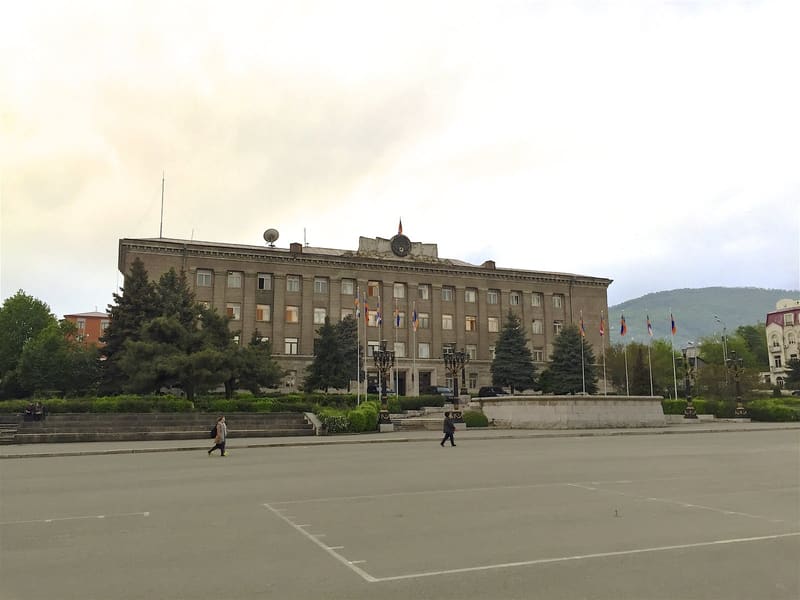
Nagorno-Karabakh is a mountainous region of the South Caucasus, east of Armenia. Most of its people were Armenian, but the territory is internationally recognised as part of Azerbaijan. Its main town was Stepanakert, which Azerbaijan calls Khankendi.
The region’s Armenians declared independence in 1991 and held the territory after a first war, from 1988 to 1994. No state, not even Armenia, recognised that republic. Azerbaijan took back a large part of the area in the 2020 war, then the rest in September 2023.
After the 2023 offensive, more than 100,000 Armenians fled to Armenia within a week. The self-proclaimed republic was dissolved on 1 January 2024.
An Armenian region in Soviet Azerbaijan
On 7 July 1923, the Soviet authorities created the Nagorno-Karabakh Autonomous Oblast inside the Azerbaijan Soviet Socialist Republic. It covered 4,161 km², and Stepanakert became its capital.
In the 1926 Soviet census, Armenians made up 89.2% of its population. By 1989, the figure had fallen to 76.9%. Throughout the Soviet period, Armenian officials and intellectuals asked Moscow to transfer the region to Soviet Armenia. Moscow refused.
Armenians call the region Artsakh, after a province of the ancient kingdom of Armenia. It has many medieval churches and monasteries, such as Gandzasar and Dadivank. Azerbaijan also regards it as historic land, especially the town of Shushi, which it calls Shusha.
Key dates
- 7 July 1923The Nagorno-Karabakh Autonomous Oblast is created inside Soviet Azerbaijan.
- 20 February 1988The regional soviet votes 110 to 17 to request transfer to Soviet Armenia.
- 2 September 1991The Nagorno-Karabakh Republic is proclaimed. A referendum on 10 December 1991 approves independence.
- May 1994Russian-brokered ceasefire. Armenian forces control Nagorno-Karabakh and seven surrounding districts.
- 1–5 April 2016The “Four-Day War”: the worst fighting since 1994.
- 27 September–10 November 2020The 44-day war. The ceasefire takes effect on 10 November, and Russian peacekeepers are deployed.
- 12 December 2022The blockade of the Lachin corridor, the only road between Armenia and Nagorno-Karabakh, begins.
- 19–20 September 2023Azerbaijani offensive and surrender of the local Armenian forces.
- Late September 2023More than 100,000 Armenians leave for Armenia.
- 1 January 2024The self-proclaimed republic is dissolved, under a decree signed on 28 September 2023.
- 12 June 2024Russian peacekeepers complete their withdrawal.
- 5 February 2026A military court in Baku sentences former Nagorno-Karabakh leaders, including former president Arayik Harutyunyan, to life in prison.
1988–1994: the first war
On 20 February 1988, the regional soviet asked for Nagorno-Karabakh to be transferred to Armenia. Huge demonstrations took place in Yerevan. The conflict quickly turned violent: pogroms against Armenians in Sumgait in 1988 and in Baku in 1990, violence against Azerbaijanis in Gugark in 1988 and in Khojaly in 1992.
After the Soviet Union collapsed, open war broke out in 1992. Armenian forces took Shushi in May 1992, then the Lachin corridor, which links Nagorno-Karabakh to Armenia. A ceasefire was signed in May 1994. The Armenians then controlled Nagorno-Karabakh and seven Azerbaijani districts around it.
The war killed thousands of people. Hundreds of thousands of Armenians and Azerbaijanis had to leave their homes. For almost thirty years, the OSCE Minsk Group, co-chaired by France, Russia and the United States, tried and failed to secure a peace deal.
2020: the 44-day war
On 27 September 2020, full-scale fighting resumed. The Azerbaijani army advanced for six weeks. On 8 November, it took Shushi, about fifteen kilometres from Stepanakert.
On the night of 9 to 10 November, Armenia, Azerbaijan and Russia signed a statement that ended the war. Armenia handed back the districts around Nagorno-Karabakh, and Azerbaijan kept the areas it had taken in the fighting. About 2,000 Russian troops were deployed to guard the line of contact and the Lachin corridor.
According to official figures from both countries, 3,825 Armenian and 2,906 Azerbaijani soldiers were killed. Civilians were also killed on both sides.
The blockade, then the 2023 exodus
On 12 December 2022, Azerbaijanis presenting themselves as environmental activists blocked the Lachin corridor. In April 2023, Azerbaijan set up a checkpoint on the road. Food, medicine and fuel ran short. On 22 February 2023, the International Court of Justice ordered Azerbaijan to ensure free movement along the corridor in both directions.
On 19 September 2023, Azerbaijan launched an offensive. The next day, the local Armenian forces accepted a ceasefire that provided for their disarmament. Residents began leaving for Armenia. On 25 September, an explosion at a fuel depot near Stepanakert, where families were filling up before leaving, killed more than 170 people.
On 3 October 2023, the Armenian government counted 100,617 people who had arrived from Nagorno-Karabakh, almost the entire Armenian population of the region. On 28 September, the president of the self-proclaimed republic, Samvel Shahramanyan, had signed a decree dissolving all its institutions as of 1 January 2024. In December 2023, in exile in Yerevan, he said the decree had no legal value. Armenia calls it ethnic cleansing; Azerbaijan says it guaranteed the rights of residents who wanted to stay.
And today?
The Armenians of Nagorno-Karabakh now live in Armenia. The Armenian state pays them monthly benefits and funds housing certificates. In October 2026, 46,000 people were still receiving the monthly benefit.
Russian peacekeepers left the region in June 2024, before the end of their five-year mandate. Several former Nagorno-Karabakh leaders, arrested in 2023, are held in Baku. On 5 February 2026, a military court there sentenced former president Arayik Harutyunyan and four other former officials to life in prison.
The peace treaty between Armenia and Azerbaijan, initialled in Washington on 8 August 2025, has still not been signed or ratified. It mentions neither Nagorno-Karabakh nor the return of its residents.
Further reading
Our explainers and stories about Nagorno-Karabakh and its people:
- The history of Artsakh (Nagorno-Karabakh): from antiquity to the 2023 exodus
- Armenia-Azerbaijan peace agreement: what it says and where it stands
- The Armenian Genocide: what you need to know
- Displaced Karabakh Armenians: monthly aid extended to June 2027, new jobs programme in January
- Six years after the 9 November 2020 statement, the Artsakh Public Council demands answers from Moscow and Yerevan
- Ruben Vardanyan denied access to his lawyer in Baku since 25 August, says his wife Veronika Zonabend
- Erdogan and Aliyev in Shushi: Baku notes the peace treaty with Armenia is still unsigned
Frequently asked questions
Where is Nagorno-Karabakh?
In the South Caucasus, east of Armenia, on territory internationally recognised as part of Azerbaijan. Its main town was Stepanakert. Armenians call it Artsakh.
Why did Armenians leave Nagorno-Karabakh in 2023?
After a nine-month blockade of the Lachin corridor, Azerbaijan launched an offensive on 19 September 2023. Local Armenian forces surrendered the next day, and more than 100,000 Armenians, almost the entire Armenian population, left for Armenia within a week.
Does the Nagorno-Karabakh Republic still exist?
No. Proclaimed in 1991 and never recognised by any state, it was dissolved on 1 January 2024, under a decree signed on 28 September 2023 by its president, Samvel Shahramanyan.
Does the peace treaty mention Nagorno-Karabakh?
No. The agreement initialled in Washington on 8 August 2025 mentions neither Nagorno-Karabakh nor the return of its residents. It has not yet been signed or ratified.