Armenian Christmas: why 6 January?
The Armenian Apostolic Church celebrates the birth of Christ and his baptism on the same day: 6 January. The eve, the blessing of water and the festive meal: what to know about Armenian Christmas.
- Published
- Facts as of
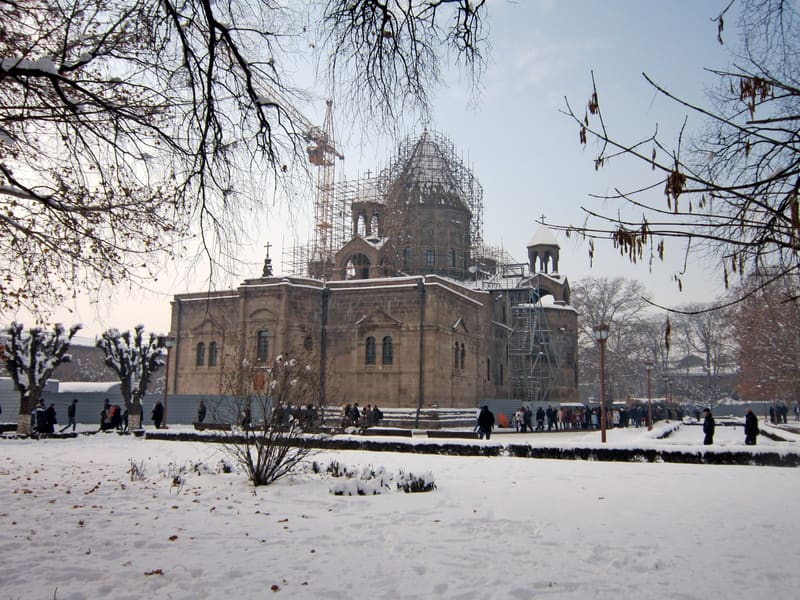
One feast, on 6 January
On 6 January the Armenian Apostolic Church celebrates the Nativity and the Theophany: the birth of Jesus and his baptism in the Jordan. This was the custom of the early Christians in the East.
Rome was already marking Christ’s birth on 25 December in the 4th century, and the Greek-speaking churches adopted that date at the end of the same century. The Armenian Church kept the older single feast on 6 January.
Why some celebrate on 19 January
The Armenian Church adopted the Gregorian calendar in 1923, so in Armenia and in France Christmas falls on 6 January of the civil calendar.
The Armenian Patriarchate of Jerusalem still follows the Julian calendar, which runs thirteen days behind. In Bethlehem, Armenian Christmas is therefore celebrated on 18 and 19 January.
Candles on the eve, blessing of water on the day
- On the evening of 5 January the eve service is called Jrakalouyts, “the lighting of the lamps”. Worshippers carry home a candle lit in church. This candle service is held only twice a year; the other time is on the eve of Easter.
- On 6 January, after the liturgy, comes the blessing of water (Jrorhnek): the priest dips a cross into the water and pours in holy chrism (Muron) from a dove-shaped vessel. Worshippers take some of the blessed water home.
- In the following days, priests bless the homes of the faithful.
Fasting and the festive meal
Christmas is preceded by a week of fasting. On the evening of 5 January, the meal that ends the fast (khetum) is still meatless, but fish is allowed: trout and rice pilaf with raisins are traditional dishes.
Public holidays in Armenia
Armenia’s law on holidays makes 31 December to 2 January and 6 January non-working days, so New Year and Christmas form one holiday period. In France, Armenian parishes celebrate Christmas on 6 January.
Further reading
- Nativity and Theophany of Our Lord — Église arménienne d’Amérique (Eastern Diocese)
- Nativity and Theophany — armenian-church.com
- It’s still Christmas in Armenia — Smithsonian Center for Folklife
- Loi arménienne sur les fêtes et jours de mémoire (ARLIS)
- Weihnachten der armenischen Kirche in Bethlehem — Vatican News