Dublin: Core Group of Support to Armenia condemns Russian pressure, pledges help on energy
- Published
- Place
- Dublin, Ireland
- Event date
- Past event —
Summary
About a dozen European countries and EU leaders issued a joint statement of support for Armenia in Dublin on Thursday, 12 November. They accuse Russia of stepping up political and economic pressure on Yerevan since the parliamentary elections five months ago. According to the text, Moscow has imposed “unprecedented” restrictions on Armenian exports and is “now threatening” to use energy supplies as a means of intimidation. The Core Group of Support to Armenia includes France, the United Kingdom, Estonia, Latvia, Lithuania and the EU High Representative. Germany, the Netherlands, Norway, Poland, and the presidents of the European Council and the European Commission joined the statement. They pledge to help Armenia diversify its trade and energy partnerships.
A meeting on the sidelines of the EPC summit
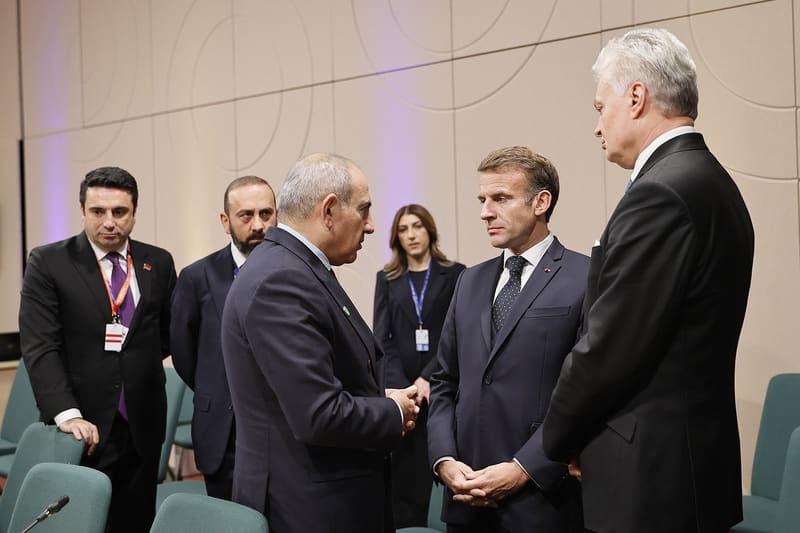
The meeting took place on Thursday, on the margins of the 9th European Political Community summit in Dublin. Around Nikol Pashinyan sat the leaders or representatives of France, Estonia, Latvia, Lithuania, the United Kingdom and the EU High Representative for Foreign Affairs. The text was published the same evening by the Élysée and by EU services.
Others signed without being at the table: Germany, the Netherlands, Norway, Poland, the President of the European Council and the President of the European Commission. The published versions differ slightly on the exact list of participants. The substance is identical.
What the statement says
The text opens with the core message: support for Armenia’s “sovereignty, territorial integrity, stability, independence and resilience”. It then turns to the parliamentary elections held five months ago. According to the signatories, Armenians made “a clear choice in favour of peace, democracy and closer ties with Europe”, despite “multi-faceted interference from Russia”.
Then comes the toughest line. Since those elections, Moscow’s direct political and economic pressure “has only been increasing”. Russia has imposed “unprecedented restrictions on Armenian exports”. And it “is now threatening to use energy supplies as a means of intimidation”.
The announced response: help Armenia “choose its own destiny freely” by diversifying its partners, particularly in trade and energy.
The background: EU tariffs and Russian bans
The statement builds on a decision already taken. Since 10 October, EU Regulation 2026/2269 has suspended for two years the duties on about 80% of Armenian exports to the EU. Those preferences were only entered into the EU’s TARIC customs database in early November.
On the other side, Moscow has piled up bans since the start of the year: farm products, fish, flowers and several drinks, including goods in transit. Yerevan has taken the matter to the Eurasian Economic Commission. The hearing has already been postponed twice.
The text also welcomes the peace process with Azerbaijan, the “significant progress” since the Washington summit of August 2025, and normalisation with Türkiye. The same day in Dublin, Nikol Pashinyan met Ilham Aliyev.
Analysis
The tone has shifted. Until now, Europeans spoke of supporting Armenia’s “resilience” without naming the problem. This time Russia is named three times, and the word “intimidation” is used about energy. It is a strong political signal, signed by Paris, Berlin and London. But a statement is not a pipeline. Armenia still relies heavily on Russian gas delivered via Georgia. The text puts no figure on new aid and sets no timetable. Its real weight will be measured by the concrete projects announced in the coming months.
Possible consequences
The signatories promise action to diversify Armenia’s trade and energy, with no set timetable. The Russian restrictions case remains pending before the Eurasian Economic Commission.