Lake Sevan: Armenia bans sig whitefish caviar exports for another six months
- Published
- Place
- Lake Sevan, Armenia
- Event date
- Past event —
Summary
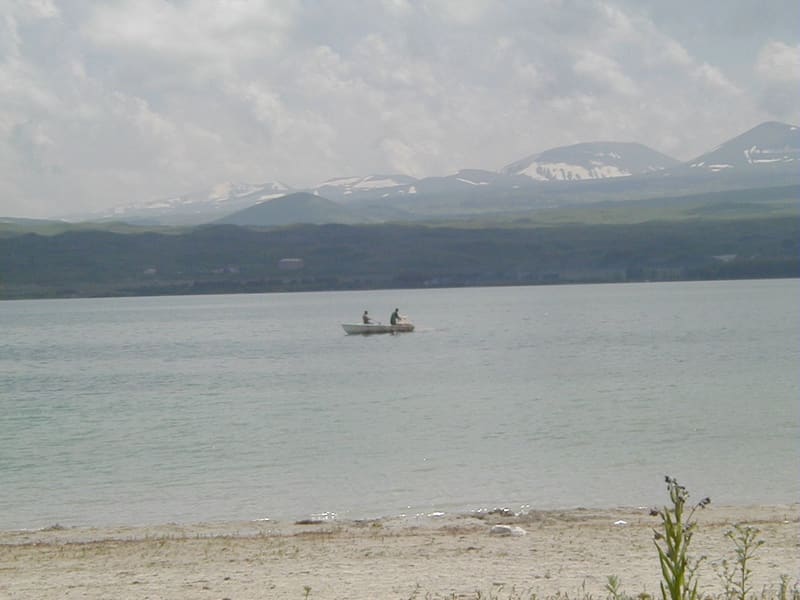
Sevan caviar will stay in Armenia. On Thursday 12 November, the government decided to ban for six months the export of roe from sig whitefish, the most-caught fish in the great lake. The measure will take effect on 2 January 2027. It aims to protect the species’ natural reproduction. It is not a first: the ban has already been extended several times. According to Sputnik Armenia, sig stocks in the lake rose from about 2,670 tonnes in 2019 to some 3,590 tonnes in 2025. Specialists nonetheless estimate that a healthy lake could hold close to 10,000 tonnes. The ban also covers sales to countries of the Eurasian Economic Union, including Russia. It must be notified to the Eurasian Economic Commission. For Sevan’s fishermen and restaurateurs, the market therefore remains local.
The decision was adopted without debate, among the cabinet’s “non-reported” items. The Ministry of Environment had put the draft out for public consultation in September.
A fish from the north
Sig is a whitefish, a cousin of the lavaret of Alpine lakes. It is not native to Sevan: it was introduced in the 1920s from lakes in northern Russia. It has since become the lake’s main commercial fish, far more than the ishkhan, the Sevan trout, whose fishing is completely banned and which is now raised only in fish farms.
Its small, pale eggs are in demand. Their high price was the reason for the first export ban, Sputnik Armenia recalls. The text covers sig roe of Armenian origin, fresh, chilled, frozen or prepared, under four codes of the Eurasian customs nomenclature.
Stable stocks, but far from the target
Thanks to catch controls, stocks have remained stable since 2019, with some fluctuations. They allow industrial fishing of several hundred tonnes a year: the cap was raised to about 1,120 tonnes in 2025. The stock considered optimal, around 10,000 tonnes, would allow annual catches of nearly 2,000 tonnes. Keeping roe exports blocked is meant to move closer to that level.
Other rules apply too. Every year, sig fishing is banned during spawning, usually from late November to late January. Between December 2025 and February 2026, the Ministry of Environment, Sevan National Park and the Scientific Centre of Zoology and Hydroecology carried out scientific fishing to monitor the fish’s reproduction and date its stages.
Analysis
The measure is modest, but it says a lot about Sevan. The lake is at once a national treasure, a water reserve and a livelihood. Its resources were overexploited in Soviet times, then during the hard years after independence. Keeping the caviar at home protects the fish that produces it. It also deprives fishermen of a lucrative outlet abroad. The authorities’ choice is clear: rebuild the stock first, sell later. The bet will pay off if quotas and the fight against illegal fishing keep up.
Possible consequences
The ban will apply from 2 January to early July 2027. The Ministry of Economy must notify the Eurasian Economic Commission at least three days beforehand.