Armenia moves closer to Europe’s supercomputers with a EuroHPC statement of intent
- Published
- Place
- Chișinău, Moldova
- Event date
- Past event —
Summary
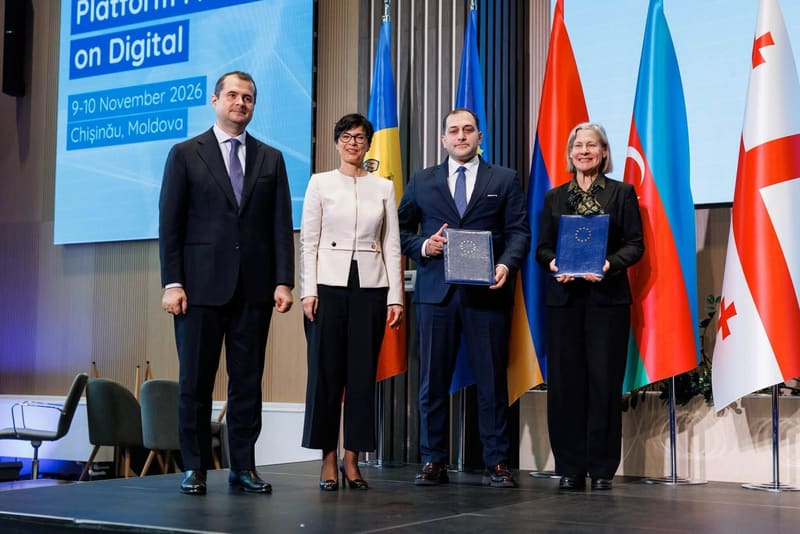
Armenian researchers may soon run their calculations on Europe’s most powerful machines. In Chișinău, Moldova, Armenia and the European Commission exchanged a statement of intent on cooperation with EuroHPC, the European joint undertaking that runs the Union’s supercomputers. The text sets out the steps for Armenia to become a “participating state”. Its universities, research centres and technology firms would then gain access to these computing resources. A second statement, also signed with the Swedish development finance institution Swedfund, aims to make Armenia’s 5G networks safer and more reliable. Both exchanges took place at the first ministerial meeting on digital affairs of the EU Connectivity Agenda Platform, on 9 and 10 November. Armenia’s Ministry of High-Tech Industry and Artificial Intelligence announced them on 12 November.
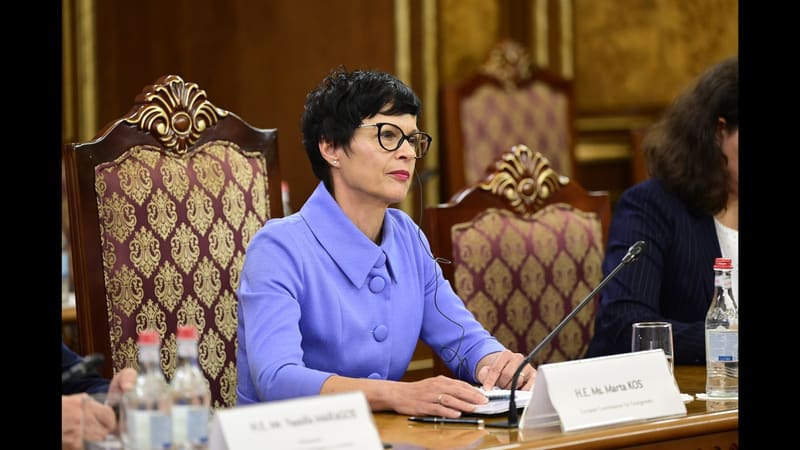
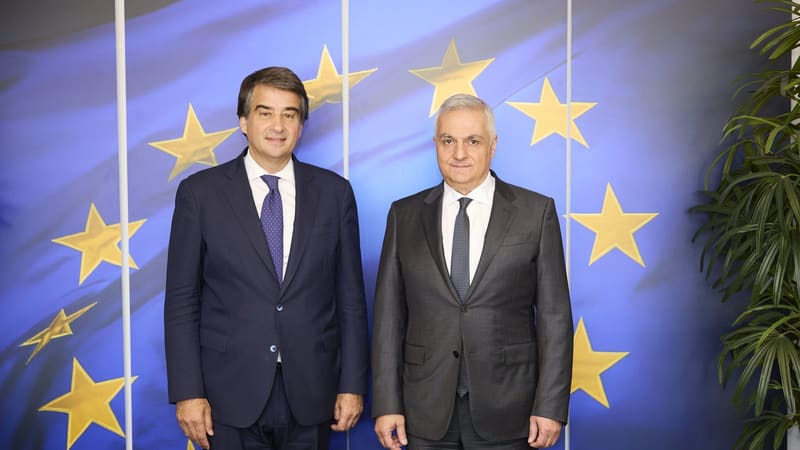
For Armenia, the text was handed over by Deputy Minister Gevorg Mantashyan. On the European side, by Adrienn Kiraly, Director for Neighbourhood East and Türkiye at the Commission’s Directorate-General for Enlargement. Minister Davit Tadevosyan attended the ceremony. The day before, he had met European Enlargement Commissioner Marta Kos to discuss digital security and high-performance computing.
EuroHPC: pooling computing power
EuroHPC brings together the European Union, states and private partners. It funds and runs a network of supercomputers installed in several countries, such as LUMI in Finland, Leonardo in Italy and MareNostrum 5 in Spain. Researchers obtain computing time through calls for proposals, for work on climate, medicine, materials or artificial intelligence.
A “participating state” sits on the joint undertaking’s bodies, and its teams can answer these calls. According to the Armenian ministry, the statement paves the way for membership and should “deepen cooperation with European innovation networks”. No timetable has been published. The financial terms have not been made public either.
Safer 5G networks, with Sweden
The second statement brings together the ministry, the European Commission and Swedfund. It aims to strengthen “the security, resilience and reliability” of Armenia’s telecommunications networks, especially 5G. It was handed over by Gevorg Mantashyan and Sweden’s ambassador to Armenia, Eva Sundquist.
The Chișinău meeting gathered digital ministers from the EU, the Black Sea region, the South Caucasus, Turkey and Central Asia. On the agenda: digital links along the Trans-Caspian corridor, secure infrastructure and artificial intelligence. It was organised by the Commission and Moldova’s Ministry of Economic Development and Digitalisation.
Analysis
The tech sector is one of the engines of Armenia’s economy. Access to European supercomputers would give it a tool that no country of its size can afford alone. The signal is political too: after the strategic partnership signed with Paris and progress on visas, Brussels is multiplying practical cooperation with Yerevan. But a statement of intent is not membership. Everything will depend on the final agreement, the contribution asked of Armenia and its laboratories’ ability to put projects together.
Possible consequences
Both sides must now begin the EuroHPC membership process. The 5G strand should lead to technical and financial cooperation with Swedfund.