Doors that open, doors that slam
- Published
- Place
- Armenia
Some weeks, Armenian news reads like a Feydeau farce. A door opens on the left, another slams on the right, someone steps out of the wardrobe. From 9 to 14 November, I took stock: Margara, Moscow, Dublin. And one door that should never have stayed shut.
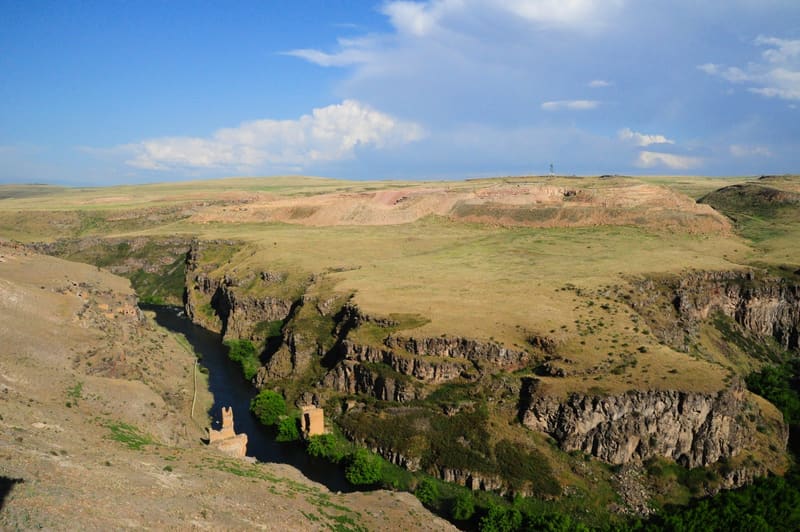
First, the most famous one, the one we have been waiting for since 1993. On Tuesday, Turkey’s transport minister announced that everything was ready to open the Margara–Alican crossing and the rail link. On the Armenian side, Margara has already been renovated. So the entrance has been repainted, the doormat laid, the doorbell tested. All that is missing is someone to turn the key.
On Wednesday, in Antalya, Nikol Pashinyan and Recep Tayyip Erdoğan said they wanted to see normalisation through “to its conclusion”. On Friday, in Dublin, Pashinyan specified that the two countries were “very close to the final stage”: diplomatic relations and a fully open border. On the Turkish side, work on the Kars–Gyumri railway is advancing right up to the border.
I have heard plenty of them in Armenia, stages that were supposed to be the last. So many that I wonder whether, in diplomacy, the “final stage” is not a unit of measurement in its own right, somewhere between the light year and “we’ll get back to you”. But border posts that are ready and rails that keep advancing are no longer just rhetoric. That is concrete.
My family left those lands in 1915, on foot, with no luggage and no return. A century later, I expect neither forgetting nor revenge from this border. All I hope is that one day we can take the train from Gyumri to Kars the way you take a train anywhere else: with a ticket, a suitcase, and the right to look out of the window. That day, it will not be a page being turned. It will be a door we finally walk through standing tall.
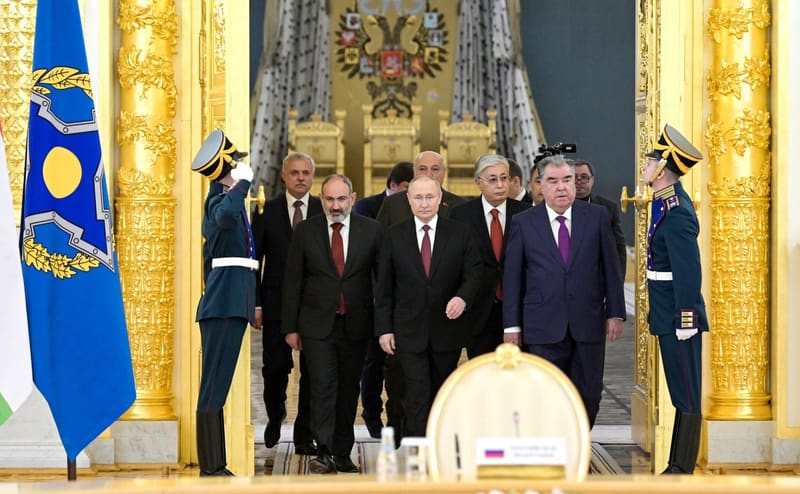
While one door creaks in the west, another closes in the north. On Wednesday, in Moscow, the CSTO stripped Armenia of its voting rights: Yerevan has not paid its dues since 2024. No Armenian delegation was in the room. So the floor was taken away from someone who had not come to take it. Armenia has not been expelled: membership card, but no more ballot paper. The next day, Minsk called it a “pseudo-ally”. When allies start calling each other “pseudo”, the end-of-year dinner promises to be tense.
On Thursday, in Dublin, Pashinyan and Ilham Aliyev published a joint readout, word for word: the TRIPP route, 105,000 tonnes of goods delivered to Armenia via Azerbaijan in a year, a future power interconnection. Yerevan and Baku agreeing down to the last comma: a few years ago, we would have taken it for an April Fool’s joke. The peace treaty is still not signed. But here, the door is no longer bricked up.
The same day, Europe was holding the door wide open: several countries, including France, and the EU’s leaders denounced Russia’s “unprecedented” pressure on Armenian exports. And Armenia, very politely, did not sign the declaration on European security launched by Paris, which some forty countries signed, including Georgia and Moldova. No explanation given. The next day, Pashinyan saw Armenia in the European Union within twenty years, and announced three visits to Russia in December. One foot on Brussels’ threshold, the other on Moscow’s doormat: he calls it a “balanced” policy. I will not attribute to him reasons he has not given. But a silence can be explained too.
I am neither in Brussels nor in Moscow, and Barev World has no side to pick. What I hear around me, in Armenia as in France, is above all weariness: the weariness of a small country summoned to choose its door at every summit. Some see it as prudence, others as ambiguity. I leave it to the chancelleries to decide. My only wish is that behind whichever door is chosen, there will be Armenians living better lives. In the meantime, we do as we do at home: we always keep a spare chair for the unexpected guest.
There is also a door we do not joke about. On Tuesday, Arsen Gevorgyan, 46, who headed the Strong Armenia list in the Stepanavan municipal elections, died in Nubarashen prison. Held in pre-trial detention since 21 October on charges of vote-buying, he denied the accusations and had not been tried. An investigation has been opened, and the judge who had ordered his detention has withdrawn from the case. The family’s lawyers say the ambulance was called too late. The penitentiary service says it “did everything”. No one yet knows who is right. But a man presumed innocent died in the custody of the state, and the investigation must be beyond reproach. A country knocking on Europe’s door is also judged by this.
Fortunately, some people do not wait for the door to be opened for them. On Friday, Barev World published its first interview: we too opened a door this week, and the paint is still wet. Nicolas Ancelin, twice European champion with Armenia’s national rugby team, co-chairs a federation that started again from scratch two years ago: no pitch, not a single registered player. He told me about his great-grandmother, a survivor of the genocide, who passed through the camps of Aleppo before reaching Marseille. Our families do not know each other, but their stories are alike. His leads, a century later, to children discovering rugby in Armenia. In rugby, you don’t knock on doors: you push, in the scrum.
The same day, in Budapest, Haik Martirosyan beat Magnus Carlsen, the world number one. In 41 moves. Considerably fewer than the number of “final stages” I have heard in my life.
So many doors for a single week. Some open, others slam, one did not open in time. If something struck you and we let it slip by, write to us. Our door stays open, with no dues and no Article 25.
— Niels Minakian
Founder and publication director, Barev World