Ferdowsi’s “Book of Kings” in Armenian prose: tribute to Loris Tjeknavorian at Yerevan’s Blue Mosque
- Published
- Place
- Blue Mosque, Yerevan
- Event date
- Past event —
Summary
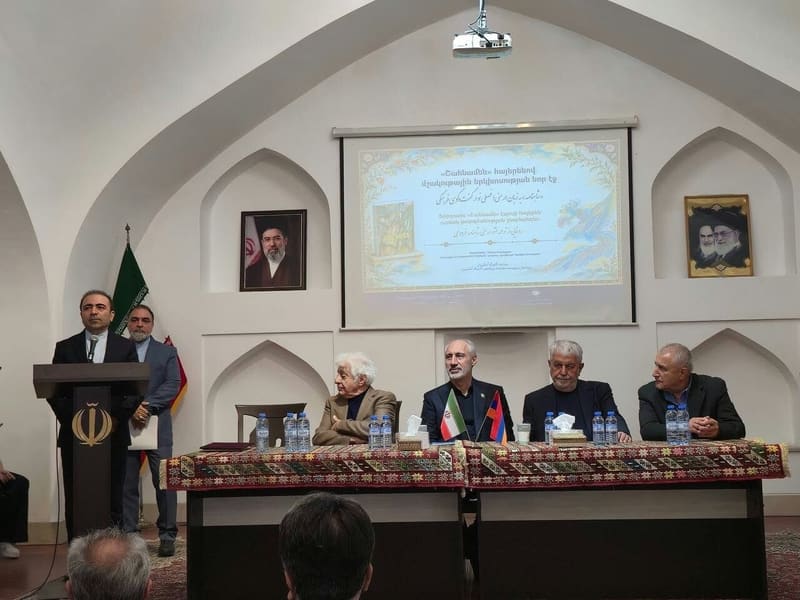
The first complete Armenian prose translation of the Shahnameh (“Book of Kings”), the epic by Persian poet Ferdowsi, was presented on Monday, 9 November, at Yerevan’s Blue Mosque. It was translated by Gevorg Asatryan under the academic supervision of Iranologist Garnik Asatryan; according to Iran’s Tasnim agency, the work took three years, from 2021 to late 2024. For the first time, Armenian readers have access to all the stories of the epic. The ceremony was attended by Iranian Vice President Hamid Pourmohammadi, in Yerevan for the Armenia-Iran intergovernmental commission. Composer and conductor Loris Tjeknavorian, whose opera “Rostam and Sohrab” is based on the Shahnameh, was honoured. The mosque’s ceremonial hall now bears the name of poet Yeghishe Charents.
Analysis
Pourmohammadi proposed setting up a “Shahnameh House” in Armenia, bringing together Iranologists, researchers and artists from both countries. Choosing Charents is more than symbolic: according to the Iranian embassy, the poet, a keen reader of Ferdowsi, helped preserve the Blue Mosque, built in the 18th century. An exhibition by Armenian painter Mariam Galstyan, inspired by the epic’s heroes, accompanied the presentation.
Possible consequences
A bust of Charents is to be installed in the hall named after him; no date has been given. Tjeknavorian, 89, received a letter of appreciation from Iran’s culture minister.