Clara Boyadjian: Batchig, solid perfumes with an Armenian name
- Interview
- Clara Boyadjian
- Role
- Co-founder of Batchig
- Company
- Batchig
- Sector
- Perfume
- Based in
- Paris, France
- Published
- Updated
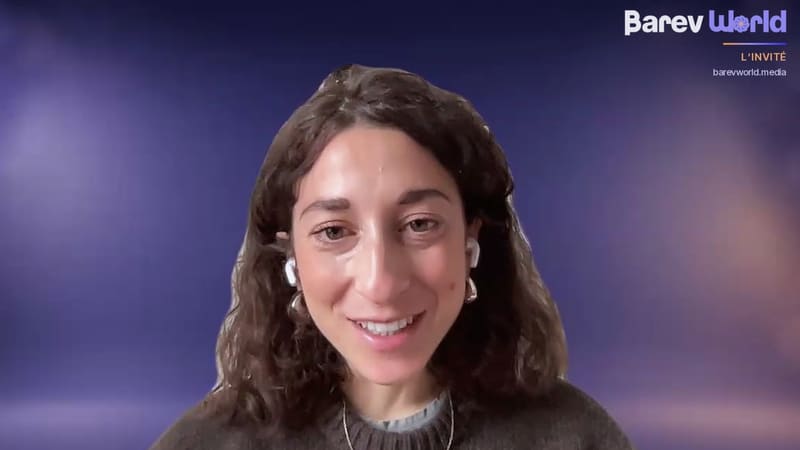
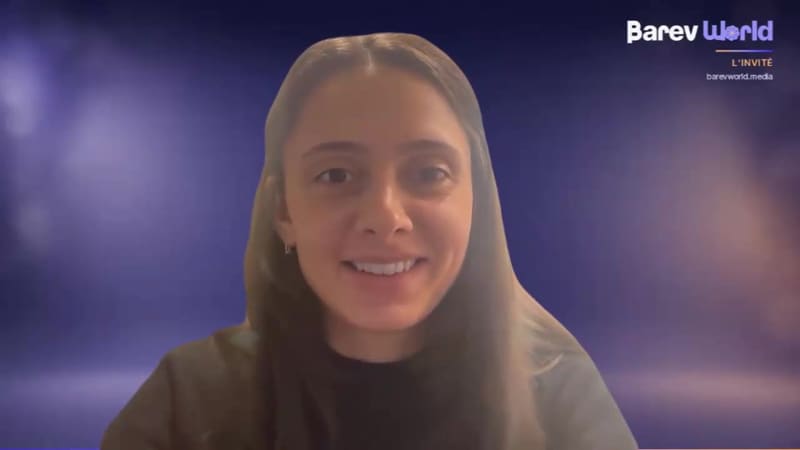
Clara Boyadjian grew up in Aix-en-Provence, in the south of France, the daughter of a father from Marseille of Armenian descent and a French mother. After preparatory classes, business school and the Institut Français de la Mode (IFM) in Paris, where she specialised in perfume, she worked at Hermès, including in New York, and then at Sézane.
In March 2026 she launched Batchig in Paris, a solid perfume brand she co-founded with Janelle Bolatova. The name, “kiss” in Armenian, is the word her grandmother used to sign her letters. The first three fragrances, Cœur d’Abricot, Charcoal Latte and Medusa, are sold online and in nine Sézane stores, from Paris to Los Angeles.
Clara Boyadjian spoke to Niels Minakian by video call on 24 November 2026.
Key facts
- Who is Clara Boyadjian?
- She grew up in Aix-en-Provence, the daughter of a father from Marseille of Armenian descent and a French mother. Trained in Paris (preparatory classes, business school, IFM), she worked at Hermès, including in New York, and then at Sézane before co-founding Batchig.
- What is Batchig?
- A Paris-based solid perfume brand launched in March 2026 and co-founded by Clara Boyadjian and Janelle Bolatova. The alcohol-free, vegan balms are 25% concentrated and come in refillable cases set with a natural stone.
- What does Batchig mean?
- “Kiss” in Armenian. It is the word Clara Boyadjian’s grandmother used to sign her letters.
- What are the three fragrances?
- Cœur d’Abricot (apricot, tea, cardamom, woody base), Charcoal Latte (milk, almond, charcoal, toasted sesame, iris, musky base) and Medusa (salt, ginger, white flowers).
- Where can you buy Batchig?
- On the brand’s website, bbatchig.com, and in nine Sézane stores in Paris, London, New York, Los Angeles and Washington. A partnership has just begun with Printemps in New York; the brand’s website also lists Merci and Conscience in Paris, and Phos in New York.
- And Armenia?
- Clara Boyadjian is in talks with several partners in Yerevan about selling Batchig there.
the idea is to apply the perfume like a kiss
The interview
Who are you, and what is your connection to Armenia?
I grew up in the south of France, in Aix-en-Provence. My father is from Marseille and of Armenian descent: he was born in France to Armenian parents. My mother is French. So I grew up with this dual culture, which is very rich. I grew up mostly in the countryside, around animals, and surrounded by beauty. That matters a lot to me, and it comes above all from my Armenian grandmother. There really is this sense, this desire to have beautiful things, perhaps also out of a little spirit of revenge, or of success. I think it is very important, especially for our grandparents’ generation, who lived through the Armenian genocide.
I studied in Paris: preparatory classes, business school, fashion school. I then spent my first working years in fashion, in particular at Hermès and then at Sézane, the fashion brand that has become very big today. Then I created Batchig, which launched in March 2026, a few months ago. But I have been working on it, thinking about it, for about two years.
I always wanted to start a business, partly because my father is an entrepreneur too. It is upbringing, and also a question of personality, but it was always at the back of my mind. When the idea for Batchig came to me, it clicked, because you also have to dare to take the plunge. I was more mature, and the idea seemed like the right one. That is what allowed me to take the leap, and I’m delighted I did.
Did you speak Armenian at home?
Not at all, honestly, and mostly for reasons of integration. My grandparents speak Armenian very well, but they did not pass the language on to their children, I think because they wanted to integrate in France. My father doesn’t speak it, or only a little, so unfortunately he couldn’t pass it on to me.
At home, when I was a child, Armenian culture came mostly through food. That is a strong element, because it is also about sharing, and sharing is strong in Armenian culture. And then abundance, joie de vivre. And values, of course: the value of work in particular, a sense of business, a sense of relationships, which is also strong on my father’s side of the family. I draw a lot of inspiration from that.
Where does the sense of beauty you inherited from your Armenian grandmother come from?
What comes to mind first, even though I am sensitive to natural landscapes, is objects, decoration, clothes. Every time, it is really about the choice, even for everyday objects. The choice can seem trivial: who cares which saucepan you buy? And yet you should always pick the saucepan that has that little detail, that is beautiful, so that you are surrounded by a world in which you feel good and which you find beautiful. Every little detail matters to feel good at home. It is perhaps a form of self-esteem, or simply a way of feeling good at home.
Have you ever been to Armenia?
Yes, and it is my best travel memory. I went in 2022, for two weeks, and I was able to travel all around Armenia. Beyond the trip itself, the country, the landscapes, it allowed me to connect with a country I know mostly through heritage. It is different to go there and meet Armenians from Armenia, who are not necessarily the same as Armenians in France.
What I really remember is the incredible, and I think unequalled, hospitality, the kindness of everyone. We felt safe everywhere, in the city, in the countryside, in more remote places. That is very important to me, and sadly it is becoming rarer and rarer. I have wonderful memories of it, and I hope to go back fairly soon.
It was just before the conflict with Azerbaijan started again, so it was a good time. When we got back, it had resumed, unfortunately. But I hope to go more often, because I have truly unforgettable memories of it.
What is Batchig, and how did the idea of a solid perfume come about?
The spirit of beauty, absolutely. That is also why I always wanted to work in fashion. This sensitivity to beauty is very strong in me, and I could not see myself creating a brand that was not first and foremost a product, and a beautiful product: I really love product, more than services.
During my studies at the IFM, a fashion school in Paris, I specialised in perfume, because I already loved the industry. Beyond loving perfume as a customer, there is a very advanced body of theory, and that specialisation truly introduced me to perfumery. Then I set it aside to work in fashion, which was my original plan. When I asked myself what brand I would like to create, I wanted to be in a sector I liked, a big market, but one where I could bring something new, an innovation, rather than create yet another clothing or accessories brand.
The idea behind Batchig is to create beautiful objects that you want to take out of the bathroom and carry everywhere, because they are small: in your handbag, when travelling, so you can put on perfume not only in the morning but throughout the day. To make the perfume ritual an everyday essential, beyond the sprays that most people only put on in the morning, in their bathroom.
Here, for example, is one of our cases, the silver one with a turquoise stone on top. They are small cases that open, and the perfume is in solid form: a balm, alcohol-free, that you apply directly with your finger on the skin, on the pulse points, where body heat is released the most, which helps the scent diffuse. Beyond the format, there is an innovation in the ritual: it is no longer a spray but a balm you apply, with that very sensory side that adds touch to scent.
And above all a clean formula: it is alcohol-free and vegan, so it is safe for the skin, whereas alcohol, which is the subject of quite a lot of debate today, can be harmful to the skin, especially in the sun. The two pillars of Batchig are innovation, both in the format, with a beautiful object you become attached to, and in a formula that is both clean and high-performing.
Where on the skin do you apply a solid perfume?
The most essential points are the wrists and the neck. They are what we call pulse points, where there are hollows in the skin. It can also be the elbows, more in summer if you wear short sleeves, behind the ears, or the temples. But the most practical and intuitive remain the wrists and the neck.
Is Francis Kurkdjian, the world-famous perfumer, an inspiration for Batchig?
Absolutely, both in terms of creativity and success. He is someone I admire a great deal, and who also seems exceptional as a person. But I don’t claim to be a perfumer: we work with noses. I don’t think I have his creative genius when it comes to scent, even though we work hand in hand with the noses and there is a big creative side to it. I am not a nose, and I prefer to make that clear.
But of course, Francis Kurkdjian is an inspiration, and I hope to meet him one way or another. It would be an honour for me, because he seems wonderful in every way.
How do you go from Hermès and Sézane to founding Batchig?
They were two magnificent training grounds, each in its own way, because they are two very different companies. Hermès is a large group, a very big family business, with craftsmanship at the heart of everything. From my very first internships, I had in mind to learn every job, with an entrepreneurial goal: I had to be very versatile and know how to do everything. At Hermès, I was lucky enough to work in product development, hand in hand with the artisans to develop collections. Then I moved into retail merchandising, a fabulous opportunity in New York. I was very close to the American market, to the Hermès stores in the United States, to sales and merchandising issues: which collections, which product assortment each store has, and whether that assortment is optimal for the demand in each region. It was much more business-oriented.
What made me want to move to Sézane was the size of the company. I felt much better in a small structure, where you can have much more varied responsibilities and change roles fairly easily, because there are fewer processes. In large groups there are more people, more processes, and that is normal: it depends on your personality. That was the case at Sézane when I started. I had done an internship there in 2017, I believe, and I joined full-time in 2020. I first worked in product development and production, on knitwear, a very strong category for Sézane. Very creative, very hands-on work, with the relationship with the manufacturers, which I love, because I really enjoy working with people.
Then, by choice, to see the other side, I moved to e-commerce, to gain the digital experience I didn’t have at Hermès. I was in charge of the website and the product assortment on the site, which is like a big store in itself. At Sézane, digital accounted, in my time, for 80% of turnover: it was the heart of the business. Based on the broad lines imagined by the collection team, the job was to create moments on the website to sell each product as well as possible and achieve the best possible sell-through rate at the end of the season. It was incredible training. Sézane is an incredible company, with very talented people.
My transition happened quite naturally. As I gained experience and maturity, got to know myself better and owned my desires more, it came on its own. At some point I could no longer do otherwise: the idea of Batchig had really taken root. I started developing it in the evenings and at weekends to dig into it, and it never went away. I think this happens to a lot of entrepreneurs: you can no longer do otherwise, because it is too present, in terms of time but above all in your head and in what you want. It becomes the priority. You have to take the plunge, and that is what I did. And often, when you take the plunge, not much happens: you are afraid, but not much happens afterwards. Of course there are risks, but on the whole you can always bounce back. You have to try. I think that is really important.
Where did you start when launching Batchig?
With the product, because I enjoy it, but above all to have proof that it was possible to develop a product that lived up to my expectations, and that my idea could take shape. In practice, it means contacting the different partners you work with on the product. Finding a perfume studio, seeing on what terms it works, whether it accepts small brands and small quantities: quantities are always an issue for small brands. Finding perfumers, noses, for the scent itself. Finding a cosmetics laboratory to develop the solid base, where the challenge was both natural ingredients and texture: not too firm, not too soft, because temperature and the stability of the formula also come into play.
Another thing that was not easy was finding the partner for these beautiful metal cases, a trade completely different from perfumery and cosmetics. On that last point, I am delighted to have found a French company run by Armenians. It is a partnership I hope will last a very long time, because I really like them and we work very well together.
We had to find the partners, look at the terms, and also budget: understand the minimum budget needed to develop this product and produce the smallest possible quantity at first, to test it. So it was mostly the product and, of course, the financial side: budgeting the launch.
How did you find your first customers, from Lulli to Sézane and Printemps in New York?
At the start, and this also comes from my Sézane experience, the idea was to launch an online brand, with our own website, so rather B2C, selling to end customers like you and me. At first that necessarily goes through word of mouth. Thanks to my previous jobs, I had built a network of people who are receptive to this kind of world, because they work in fashion. That gives you a small first pool of customers, which grows little by little. Then come social media, with a bit of sponsored content, used quite subtly and on a controlled budget. And influencers: it is important to find the right ambassadors, who connect with the brand’s world and will agree to talk about it as sincerely as possible, otherwise it is pointless.
But we quickly realised it was important to have a physical presence. It is a perfume, of course, but people are also always pleasantly surprised when they see the object in real life rather than in a photo: it has a certain weight, it is a quality case. This physical side turned out to be more important than expected, a few months after the launch. That is when the business development phase really began, which is a real job and takes a lot of energy. At first you have to convince the different players. It takes a lot of persistence, a lot of determination, and you must not be afraid of being a nuisance. These stores are so solicited that when you get no answer, it is not necessarily a bad sign: the email may have arrived at the wrong time, or not been read. When nobody knows you, it is all cold outreach: you try to convince.
It happened in stages. The first store that trusted us, and I am very grateful to them, was Lulli, a group of premium luxury fashion concept stores in the south of France. Being from the south, I knew them well. Funnily enough, I went to the company’s head office on a bit of a whim, to drop off products for the person who selects new brands. Just by going there, I ran into her: I had seen her photo, so I recognised her. She was very welcoming: “Oh, stay, come on, show me the brand.” That is how it worked. Without going in person, I would never have had that privileged contact. You have to dare, and sometimes step out of your comfort zone.
We are also lucky, and I am hugely grateful, to be supported by Sézane. It is such a major player that in terms of credibility, sales and visibility, it is huge. We started in September in their new store on rue du Bac in Paris. Because Batchig did very well there, we are now in nine Sézane stores, in Paris, London, New York, Los Angeles and Washington. It is a huge springboard for us, and I thank all the teams.
We have also just started a partnership with Printemps in New York. Again, it took persistence: finding the right contact by sending email after email, getting a meeting and finally convincing them to test the product in their store. It took several months, but it paid off. Another important lever is trade fairs. We took part in a fair focused more on fashion and design, deliberately, to stand out, rather than blend in among lots of cosmetics or perfume brands at specialist fairs. That opened many doors to stores interested in selling Batchig, especially for Christmas.
Department stores, concept stores: which partners are you aiming for?
The idea is really to select beautiful partners, even if that means having fewer of them, rather than spreading ourselves physically across a huge number of shops, which may be smaller players. We would like to have a few great partners in each big city, and a few others in smaller cities. But the idea is to be selective. So department stores are one of our priorities.
Batchig also has a real fashion DNA. The products fit very well in pure fashion stores, like Sézane, or in concept stores. It is both a beautiful gift, including for yourself, and a good add-on purchase: someone who loves a handbag will naturally be drawn to this beautiful object they can slip inside it. It is a product that fits well in the fashion and accessories world, and therefore in concept stores like Colette, which no longer exists, or rather its successors.
What are Batchig’s main challenges for 2027?
Overall, Batchig’s ambition is to become the benchmark for innovation in perfumery, in format as well as formula and gesture. In the shorter term, there are two big challenges for 2027. The first is product: widening the range. We launched with three fragrances, but the idea is to have more, for a fairly complete fragrance wardrobe that covers every olfactory family. For these new fragrances we will need to work with one or more perfumers. Francis Kurkdjian, obviously, would be a dream. We’ll see; maybe at some point it will be possible. Developing at least two new products in 2027 would be great.
The second is business development. When there is an intention, the result often follows. At the moment, 25 to 30% of our website sales are in the United States: we ship a lot of orders there. The idea would be to grow in France and Europe, but always with this American goal in mind: it is a big market, and the product does well there. The priority expansion, particularly for retailers, would rather be over there.
Will Batchig soon be sold in Armenia, in Yerevan?
It is a goal, and truly a wish. I am in talks with several partners in Armenia, in Yerevan. I think it could work well, because there is more and more demand and more and more shops opening. It is an increasingly dynamic city, where people also have purchasing power. Beyond the commercial side, it would also be out of pride, out of a desire to introduce people to the brand and create more concrete ties with Armenia. Talks are under way.
Where does the name Batchig come from?
Batchig is the word my grandmother used to sign her messages and letters: always “Batchig”. I have known this word since I was born, and I always thought it was a lovely word, for its meaning, the tenderness it evokes, but also for its letters and the way it sounds. I find it elegant, with a slight oriental touch. That is exactly Batchig’s DNA: something modern, with this oriental heritage that is strong and remains very important.
And then the kiss: we are creating a very sensory ritual, meant to be comforting, or at least I hope so. Well, the idea is to apply the perfume like a kiss, so that the effect is the same as a kiss: soft, comforting, a moment for yourself, or one you can share with someone. It worked well, and it was fairly obvious that the brand would be called that. There is also a tender side to it: it’s a Batchig, it’s my Batchig, because you become attached to the object.
How did you create Cœur d’Abricot, your first fragrance, around the Armenian apricot?
We developed three complementary first fragrances, to satisfy different types of customers, but also so that people can collect them, without two Batchigs being alike. The first one we imagined is called Cœur d’Abricot. It comes in the beige case with an orange agate, which recalls the apricot. The apricot really is the fruit of Armenia, a fruit I love: it was the starting point of the creative process.
The idea was a fairly spiritual fragrance that recalls the monasteries of Armenia and their atmosphere. You picture a monastery with a garden, fruit trees, apricot trees. In the notes there is apricot, but also tea, which recalls the drinks served in holy places such as monasteries, cardamom for a slightly spicy touch, and a very woody base. It is a woody, rather spiritual fragrance, slightly rounded and sweetened by the apricot, while remaining very balanced and very timeless. It is as much a summer fragrance as a winter one.
The stone, always a natural one, is chosen according to the fragrance’s story and notes. Agate is a stone of grounding and stability, so there is a side to it that is quite personal, quite meditative.
And your other two fragrances, Charcoal Latte and Medusa?
The second is called Charcoal Latte. It comes in the black case, with a Dalmatian jasper, a beige stone with little black dots. It is a more fashion-forward fragrance, with more character, more oriental, more gourmand. The idea was to create a modern version of the dried-fruit desserts you can find in Armenia: rather sweet, comforting, enveloping. There are notes of milk, almond, charcoal and toasted sesame for the gourmand side, and, to balance it and avoid something too brioche-like, iris and a musky base. It is a bold fragrance, for people who like this kind of note. Jasper is a stone associated with joy and creativity, something quite outward-looking.
The last one is called Medusa. It comes in the silver case, very photogenic and very luminous, with a turquoise on top. It is a fragrance of the sea, fresher, with notes of salt, ginger and white flowers. It is perfect in summer, though of course it can be worn in any season. Turquoise is a stone of connection with others: we imagined it as a rather sensual, very skin-to-skin fragrance that you can share. It is also our most unisex fragrance.
The idea is to have even more. A more floral fragrance is a bit of an obvious next step for me: we will need to develop it quickly. But these first three really complement each other, so that everyone can find something they love.
Are they fragrances for men or for women?
Both. We worked on them without trying to add more feminine or more masculine notes. That said, naturally, I am a woman, and the brand has a very fashion-oriented side: at the moment, 90% of our customers are women, and that doesn’t surprise me. Even so, it is mainly Medusa that appeals to men. It can be a little reminiscent of Zippos, the lighters men like so much, both through the design of the case and through its scent, which is more unisex. Men tend to identify more with that fragrance.
25% concentration, refillable cases: what sets your solid perfumes apart?
It matters to me, because it took a lot of work: our fragrances are 25% concentrated, the equivalent of an extrait de parfum. That is what gives long-lasting wear and a satisfying trail when you apply it, compared with other solid perfumes, which can be very, even too, light, and therefore not satisfying enough as an experience. That was the heart of our R&D: a perfume that lasts and diffuses well, without being overpowering, with a beautiful trail.
And the cases are refillable. The idea is to buy your case with its perfume; once the refill is finished, you can take it out of the case and buy just the refill, so you keep your case.