TRIPP: Armenian parliament gives final approval to the framework for the project company
- Published
- Updated
- Place
- Yerevan, Armenia
- Event date
- Past event —
Summary
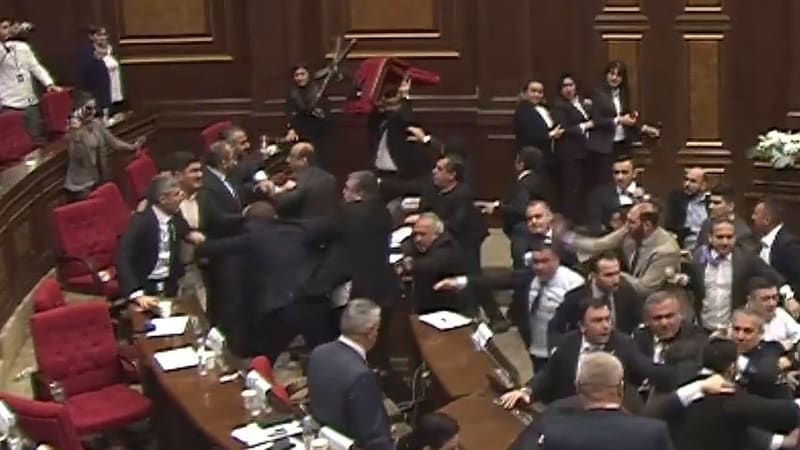
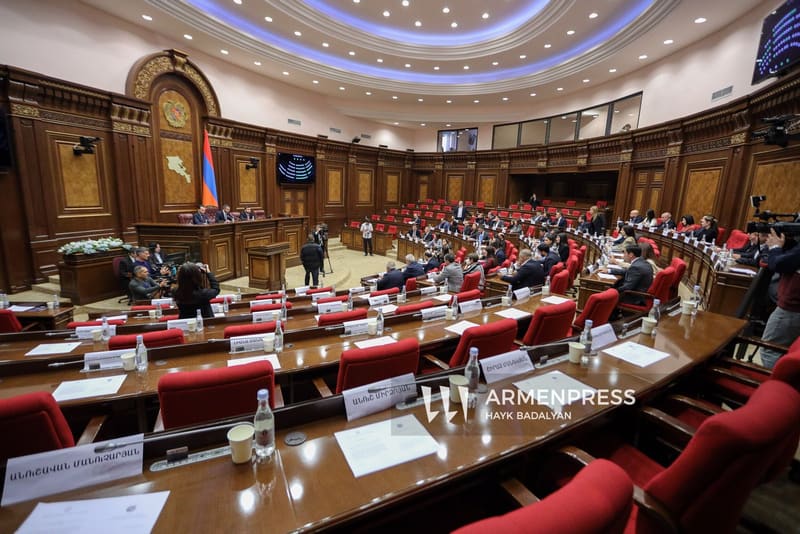
The legal framework for the “Trump Route” is moving fast. Meeting in an extraordinary sitting on Thursday 12 November, Armenia’s National Assembly adopted at first reading a package of seven bills. It is meant to allow the creation of the company that will build and run the TRIPP corridor. The package received 64 votes, with none against. The parliamentary opposition did not take part in the sitting. Deputy Justice Minister Tigran Dadunts defended a “new legal institution”: a special regime for companies created under a ratified international treaty in which the state holds at least 25%. A few hours later, MPs passed the package at its second and final reading, again with no votes against and without the opposition. Two days earlier, President Vahagn Khachaturyan had signed the law ratifying the framework agreement with the United States.
The sitting had a single item on its agenda. The government requested it on 5 November, citing the Armenia–US framework agreement on the “Trump Route for International Peace and Prosperity” (TRIPP), ratified on 28 October by 63 votes to 32. According to News.am, the vote took only a few minutes. The two opposition groups, “Strong Armenia” and “Armenia”, were absent.
A separate regime for treaty-based companies
The core of the package amends the Law on Joint-Stock Companies. Six other texts follow: the Civil Code, the laws on public procurement, on competition and consumer protection, on public–private partnerships and on bankruptcy, and the Bankruptcy Code. Each provides exceptions for the companies concerned.
“This is not simply about providing for separate exceptions to the existing law, but about creating a flexible and predictable legal framework,” Tigran Dadunts said, as quoted by Armenpress. The regime applies only when two conditions are met: the company is created under a treaty ratified by Armenia, in order to implement it, and the state owns at least 25% of it. If its stake falls below that threshold, the special rules no longer apply.
The deputy minister presented a closed list of matters that may depart from ordinary law as a safeguard. It covers major transactions, the formation of governing bodies and decision-making, the transfer of shares and shareholder liability.
A company 26% owned by Armenia
Under the framework agreement, the TRIPP Development Company will be 26% owned by Armenia and 74% by the US side, for an initial term of 49 years. If both countries extend their cooperation by 50 years, Armenia’s share will rise to 49%. The ratification was signed into law on 10 November by President Vahagn Khachaturyan.
Parliament adopted a fast-track procedure. The second reading must take place within 24 hours. Three hours are allowed for written amendments, then for the opinion of the lead committee. According to Azatutyun, National Assembly Vice-Speaker Ruben Rubinyan announced the second-reading debate for the same afternoon.
The final vote in the afternoon
The fast-track procedure delivered. Announced for the afternoon, the second reading did take place the same day, during the same extraordinary sitting. All seven bills were adopted with no votes against. The two opposition factions, Strong Armenia and Hayastan, took part in neither the debates nor the votes.
Analysis
The government chose not to write a tailor-made “TRIPP law” but a general rule for any company born of a treaty. That is legally sturdier, and it may serve other projects. But it also gives broad reach to the exemptions from procurement and competition rules. The safeguards exist on paper: a ratified treaty, a 25% threshold, a closed list. The debate, however, did not happen in the chamber, for lack of an opposition. The real questions will come with the company’s statutes, which still have to be negotiated with Washington.
Possible consequences
The laws now go to the president for signature. Then come the creation of the company itself and the negotiation of its statutes.