TRIPP route: official launch day in Armenia, a day after Ilham Aliyev received US minister Markwayne Mullin in Baku
- Published
- Place
- Yerevan, Armenia
- Event date
- Upcoming event —
Summary
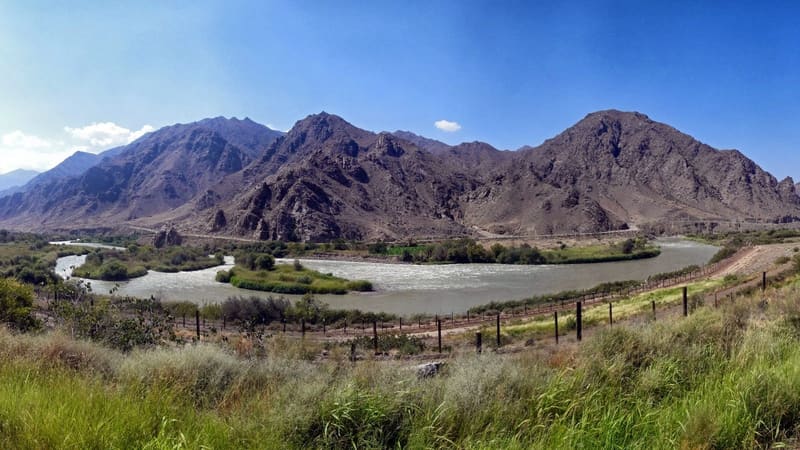
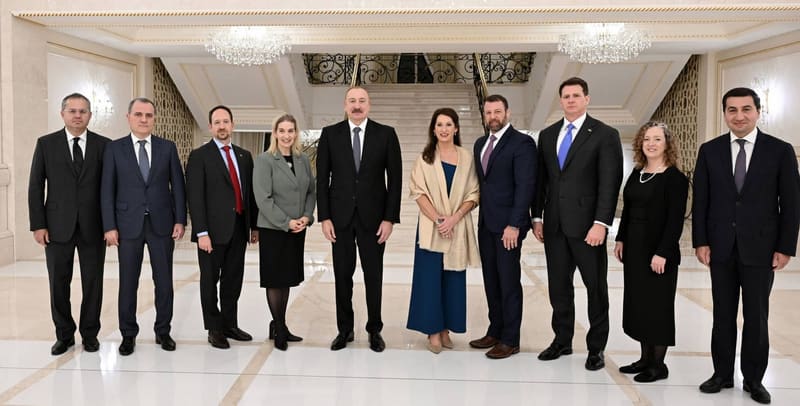
Armenia is due to officially announce on Monday 23 November the launch of the “Trump Route for International Peace and Prosperity” (TRIPP). The day before, on Sunday 22 November, Azerbaijani President Ilham Aliyev received US Homeland Security Secretary Markwayne Mullin in Baku. According to the Azerbaijani presidency, Washington’s envoy said the full operation of the corridor would develop trade between Azerbaijan and Armenia and across the region. The route is meant to link Azerbaijan to its Nakhichevan exclave across southern Armenia by road, rail and power lines. On the same Monday, the Justice Ministry is due to publish the draft new Constitution, and Nikol Pashinyan to address the nation. The programme of the ceremony had not been made public by Monday morning.
Nikol Pashinyan set the date. On Saturday 21 November, at the DigiTec technology show in Yerevan, he first announced the launch for the next day. A few hours later he corrected himself on social media: “It turns out that tomorrow is Sunday.” Implementation of the project therefore officially begins on Monday.
The prime minister has made energy a pillar of TRIPP. Armenia is to connect its power grid to those of Turkey and Azerbaijan. No timetable has been given for these interconnections.
In Baku, a Trump cabinet member talks trade
Markwayne Mullin, a former Republican senator from Oklahoma, was recently appointed to head the US Department of Homeland Security. Ilham Aliyev congratulated him and recalled his visit to Baku in January, when he still sat on the Senate Armed Services Committee.
The Azerbaijani president called 2026 a “historic” year for relations with Washington. He cited the visit of Vice President JD Vance and the signing of a strategic partnership charter. He recalled the Washington summit of August 2025 and said the region had been living in peace for more than a year.
Markwayne Mullin welcomed progress in the peace process between Azerbaijan and Armenia, stressing Donald Trump’s role. In his view, the full operation of the corridor will strengthen connectivity and trade ties between the two countries and across the region.
Yerevan hails “the biggest project since independence”
On Friday 20 November, Vahan Kostanyan took part in the Mediterranean Dialogues (MED), an international conference held in Naples, Italy. In a panel titled “Restoring prosperity in the Caucasus”, alongside Italian Deputy Foreign Minister Edmondo Cirielli, he described TRIPP as Armenia’s largest connectivity project since independence.
He stressed its multimodal nature: railway, road, power lines, pipelines and digital links. He presented it as part of the government’s “Crossroads of Peace” initiative and as an asset for the country’s energy resilience.
What has already been agreed
The project stems from the declaration signed in Washington on 8 August 2025 by Nikol Pashinyan and Ilham Aliyev in the presence of Donald Trump. Armenia’s parliament ratified the framework agreement with the United States on 28 October by 63 votes to 32. President Vahagn Khachaturyan signed it into law on 12 November.
The agreement gives 74% of the route’s development company to the US side and 26% to Armenia, for 49 years. Trilateral technical groups on transport and electricity were set up in early November.
Analysis
The TRIPP launch falls on the same day as the publication of the draft Constitution. Both issues are tied to peace with Baku, which demands a change to Armenia’s basic law before signing the treaty. In Baku, the emphasis is on trade and connectivity. In Yerevan, on sovereignty and energy. One question remains: what this “launch” will contain in practice. Without a published construction schedule or detailed financing, Monday’s announcement will above all be a political signal, aimed at Washington, Baku and Moscow.
Possible consequences
The official announcement, expected on Monday, should clarify the next steps: construction timetable, the role of the development company and deadlines for the power interconnections. The draft Constitution, published the same day, will then be put to public discussion.