New Constitution: draft out on 23 November as Pashinyan seeks to move beyond “Western Armenia”
- Published
- Place
- Yerevan, Armenia
- Event date
- Past event —
Summary
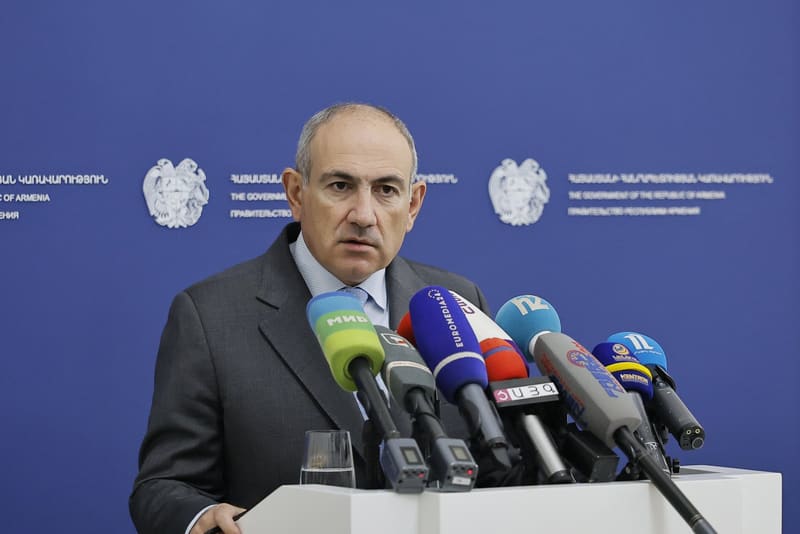
Armenia’s draft new Constitution will be made public on Monday, 23 November. Nikol Pashinyan announced it in parliament on Friday, 20 November: the Ministry of Justice will publish the text, after which the Prime Minister will address the nation. He also renewed his offer to the opposition. If it provides the six votes his majority lacks to call a referendum, he pledges to resign within a week if voters say “no”, and not to run for prime minister again if they say “yes”. A day earlier, at a Cabinet meeting, he named the core issue of the debate: the reference to the 1990 Declaration of Independence, which mentions “Western Armenia” and reunification with Nagorno-Karabakh. “The answer to Western Armenia is Eastern Turkey and Western Azerbaijan,” he said.
On Friday, Nikol Pashinyan kept it short on the timetable. “On Monday, the Ministry of Justice will publish the draft of the new Constitution, and I will address the nation,” he told MPs. The text remains a preliminary draft, expected to change after public debate.
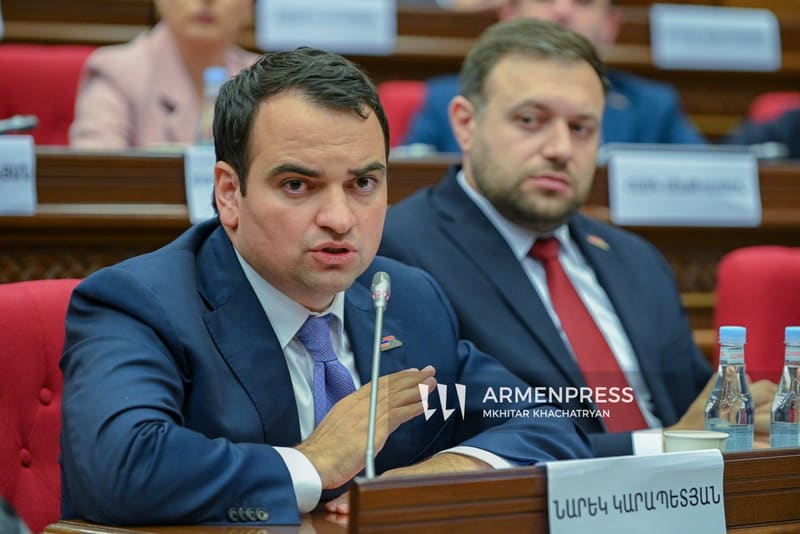
Putting a new Constitution to a referendum requires a two-thirds majority in parliament. The ruling Civil Contract party does not have it. It is six MPs short.
A repeated, more precise offer
The Prime Minister therefore restated his offer of 18 November, with more detail. If voters reject the text, he will step down within a week of the official results. If they approve it, he will not stand for prime minister in the next elections, “whether regular or snap”.
He hit back at the opposition, which questions the legitimacy of the June 2026 elections and speaks of authoritarian drift. “Where have you ever seen a dictatorship offer the opposition a referendum at the cost of the prime minister’s resignation?” he asked. To those who recall that Serzh Sargsyan made a similar promise before breaking it in 2018, he replied that he was staking his political credibility.
Both opposition blocs, Strong Armenia and Armenia (Hayastan), had already rejected the offer on Wednesday.
The Declaration of Independence at the heart of the debate
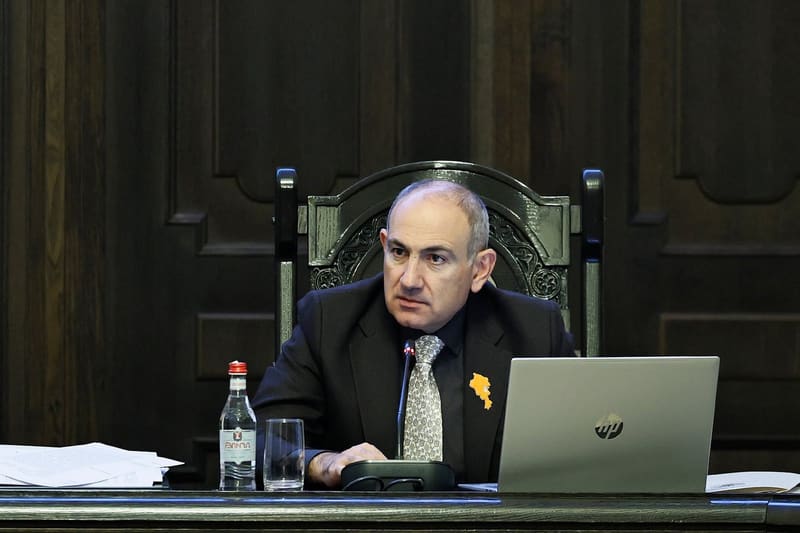
On Thursday, 19 November, at the Cabinet meeting, Nikol Pashinyan explained why the future Constitution should no longer refer to the Declaration of Independence of 23 August 1990, cited in the preamble of the current text. The document mentions “Western Armenia”, the historical name for lands now in eastern Turkey. It also cites the 1989 decision on the reunification of Soviet Armenia and the Nagorno-Karabakh Autonomous Region.
In his view, these references lock the country into a “logic of conflict”. “We must face this fact,” he insisted. “Western Azerbaijan” is a concept promoted by Baku, which demands the return of Azerbaijanis who once lived on the territory of present-day Armenia.
He challenged the Armenia faction, which includes the Armenian Revolutionary Federation (Dashnaktsutyun), over its commitment to a “United Armenia”. He asked the Strong Armenia faction whether it supports the right of return of Armenians from Karabakh and Azerbaijan, warning that Baku would answer with the issue of 300,000 Azerbaijanis. He himself called these questions “traps”.
Analysis
The timetable is tightening. Baku makes signing the peace treaty, initialled in Washington in August 2025, conditional on a change to Armenia’s Constitution. Yerevan rejects that reading and presents the reform as a domestic initiative. Yet the two files now move together: Security Council Secretary Alen Simonyan speaks of a signing “within days” of the reform. Monday’s text will show what wording replaces the reference to the Declaration. The real lock is in parliament: without six opposition votes, there is no referendum. The Prime Minister has already raised the prospect of snap elections in that case.
Possible consequences
The Ministry of Justice publishes the draft on Monday, 23 November, followed by Nikol Pashinyan’s address to the nation. The Armenia and Strong Armenia factions must say whether they still refuse a referendum.