Armenian parliament: majority refuses to put opposition statement on ‘democratic backsliding’ on the agenda
- Published
- Place
- Yerevan, Armenia
- Event date
- Past event —
Summary
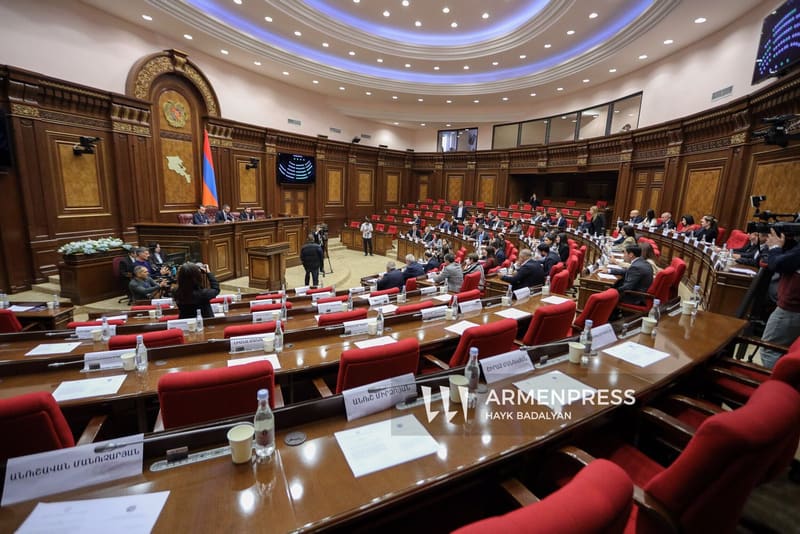
Armenia’s parliament refused on Tuesday, 17 November, to put the opposition’s draft statement on “democratic backsliding” on its agenda. The vote was clear: 54 against, 33 in favour and 4 abstentions. The text, drafted by the Hayastan (“Armenia”) faction, was titled “The Backsliding of Democracy in the Republic of Armenia, the Protection of the Rights of Individuals Subjected to Political Persecution, and Legal Guarantees.” The ruling Civil Contract party voted against. Its MP Arman Yeghoyan called the text’s findings “false” and “unsubstantiated.” Lead rapporteur Lilit Galstyan denounced the majority’s “complete indifference,” a day after hearings organised by the opposition. A joint statement by the Hayastan and Strong Armenia alliances has been announced. The same day, parliament’s deputy speaker Aram Vardevanyan pledged that his camp would block any change to the Constitution.
The outcome was scripted. On 12 November, the Standing Committee on State and Legal Affairs had issued a negative opinion. To put the text on the agenda anyway, a separate floor vote was needed.
The head of the Civil Contract faction, Arusyak Manavazyan, announced that her MPs would vote against. Then Speaker Ruben Rubinyan read out the result: “The issue will therefore not be included in the agenda.”
Two readings of Armenian democracy
Lilit Galstyan recalled the previous day’s hearings. Organised by Hayastan and joined by Strong Armenia, they took place without any majority MPs. “We had hoped the political majority would be interested in restoring democracy. It remained completely indifferent,” she said. “We spoke out about our values and have no intention of abandoning them.”
Co-rapporteur Arman Yeghoyan, from Civil Contract, explained the negative opinion. In his view, the text’s findings are “entirely false” and not backed by the assessment of any independent observer. He also targeted the Armenian Revolutionary Federation (ARF), a pillar of the Hayastan alliance: “Even if our democratic reforms have room to improve, we have nothing to do with the ARF on that score.”
Both camps cite the Economist Intelligence Unit’s Democracy Index. Arman Yeghoyan gave the scores: 3.88 out of 10 in 2016, 5.63 in 2022, then 5.35 over the past three years. He argued the recent decline should be read against the higher level reached before. He added that political culture also depends on the opposition’s actions and rhetoric.
The Constitution in the background
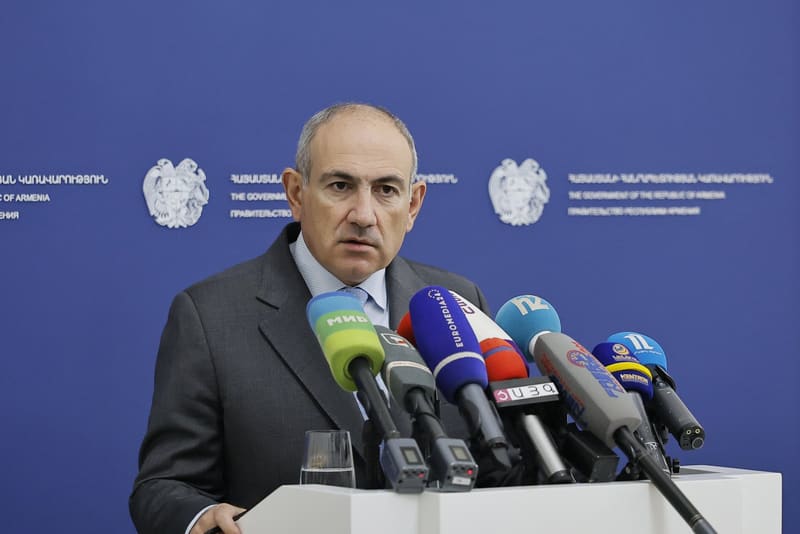
At the same time, Aram Vardevanyan, deputy speaker and a Strong Armenia MP, held a briefing. “Our position is clear: we will not allow constitutional changes,” he said.
According to him, Nikol Pashinyan and Foreign Minister Ararat Mirzoyan have themselves acknowledged that Azerbaijan is making a change to Armenia’s Constitution a precondition. Yet, he said, no country has the right to interfere in another’s internal affairs. He urged people to read Azerbaijan’s Constitution, which in his view refers to “conflict-provoking” declarations of independence, with no one in Armenia discussing it.
Analysis
The rejection was expected: the majority controls parliament and had already closed the door in committee. Above all, the debate shows two narratives that no longer meet. For the opposition, the country is sliding back, with detentions and prosecutions it calls political. For the government, these accusations are political point-scoring, and international indices remain well above 2016 levels. By refusing a floor debate, Civil Contract denies its rivals a platform. The opposition is therefore shifting the fight to joint statements and the campaign against the future Constitution.
Possible consequences
The Hayastan and Strong Armenia alliances are due to publish a joint statement on the state of democracy. The draft new Constitution, expected to be published, remains at the heart of the clash between majority and opposition.