Jobs in Armenia: record 849,741 declared jobs in October, average wage of 327,685 drams
- Published
- Place
- Yerevan, Armenia
- Event date
- Past event —

Summary
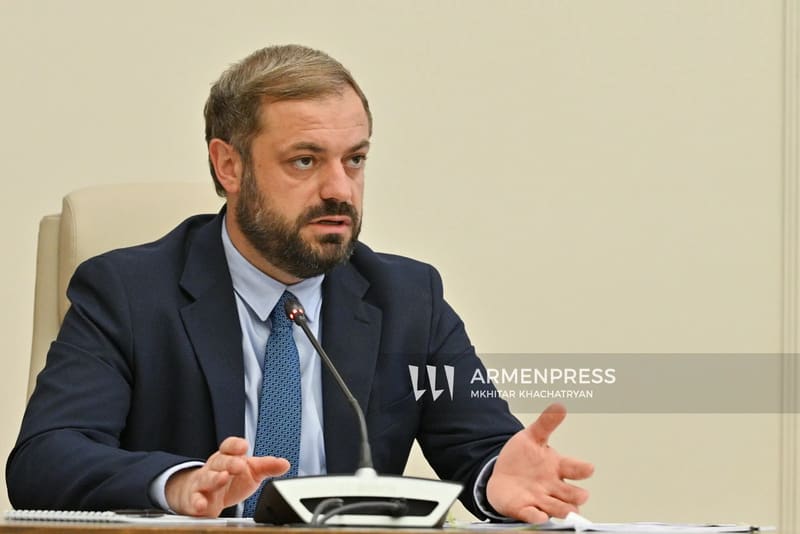
Armenia counted 849,741 paid jobs in October 2026, a level never reached before. That is 39,667 more than a year earlier, an increase of 4.9%, according to the State Revenue Committee, Armenia’s tax authority. The figure is drawn from income tax and social contribution returns filed by employers. Economy Minister Gevorg Papoyan hailed “yet another record” on the labour market on Monday 23 November. He also announced an average nominal wage of 327,685 drams for October, “also a record” in his words. A caveat: this is a gross average, before tax, pulled up by high earners. It does not say what an ordinary employee takes home. In September, the Statistical Committee put the figure at 308,927 drams, up 7.2% year on year, while prices rose 4.3%.
The count is based on tax data. Every month, employers declare their employees’ income tax and social contributions. The tax authority derives from this the number of positions generating income.
“There has never been a time in Armenia when we had 849,741 jobs,” the minister wrote on Facebook. In his view, both indicators, the number of jobs and the average wage, are at their highest level.
An average that hides big gaps
The average wage adds up all gross pay and divides it by the number of employees. It is neither a median nor a net wage. Large companies and the best-paid sectors weigh heavily in the calculation. Many Armenians therefore do not recognise themselves in the figure.
Regional gaps are wide. According to the Statistical Committee’s latest regional data, the average reaches 360,992 drams in Yerevan, but only 157,478 drams in Gegharkunik province, around Lake Sevan, the lowest in the country. Shirak, the Gyumri region, shows the fastest annual growth: 9%.
Public, private and purchasing power
Over the first nine months of 2026, the average wage stood at 312,079 drams, up 5.8% year on year. In the public sector it is rising faster, by 9.2%, to 248,850 drams. The private sector still pays more, at 335,792 drams, but grew only 4.6%.
Wages are outpacing prices. In September, the 7.2% annual rise compares with inflation of 4.3%. The real gain in purchasing power therefore comes to about 2.8% year on year.
The October figure put forward by the minister has not yet been published by the Statistical Committee, which remains the official reference for wages.
Analysis
The government has made jobs and wages its main economic argument. These figures come as it defends a 2027 budget that cuts aid to poor families by a third in favour of employment programmes. But a job declared to the tax office is not necessarily a new job: part of the increase may come from jobs leaving the informal economy. And the national average masks a two-speed country, between Yerevan and the provinces. For families, the real test remains purchasing power. It is rising, but slowly.
Possible consequences
The Statistical Committee is due to publish its own October wage figures. They will show whether the record announced by the minister holds up in the official series.