Armenia health insurance: MPs back expansion to low earners, families and taxi drivers
- Published
- Place
- Yerevan, Armenia
- Event date
- Past event —

Summary
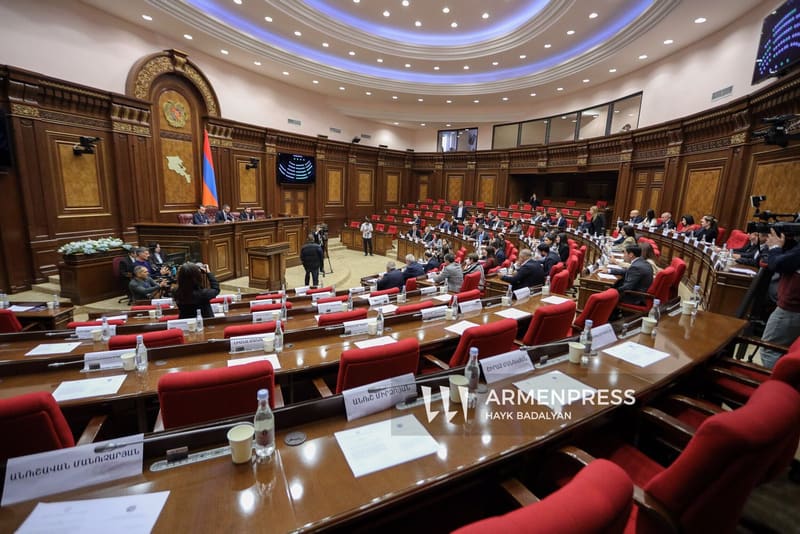
Armenia’s universal health insurance will open to around 400,000 more people in 2027: on Wednesday, 18 November, parliament adopted at first reading the bill that expands it. The vote: 53 in favour, none against, 29 abstentions. From 1 January 2027, employees earning up to 200,000 drams a month will join the system. There are about 350,000 of them. Their monthly premium of 10,800 drams will be shared: 4,400 drams from the state, 4,400 from the employer and 2,000 from the employee. Another novelty: insured people will be able to cover one or two relatives, depending on their salary. Taxi drivers working through digital platforms will also be able to join. The text amends the laws on universal health insurance and on medicines. It still needs a second reading.
Health Minister Anahit Avanesyan presented the bill to MPs on Tuesday, 17 November. The first-reading vote took place the next day.
According to the minister, more than 1.8 million people are already covered by universal health insurance, launched on 1 January 2026. Of the roughly 400,000 new beneficiaries expected in 2027, about 350,000 are low-income employees. The rest are relatives of insured people and taxi drivers.
Insuring a relative: one or two, depending on salary
From 2027, an insured person earning between 200,000 and 500,000 drams a month will be able to enrol one family member. Above 500,000 drams, they will be able to enrol two. The measure mainly targets non-working spouses and student children, as well as parents who have not yet reached retirement age.
The procedure is simple, according to the minister: a single application to the Health Insurance Fund, then the insured person pays the monthly premium. It will also be possible on Armed, the online health platform. The relative does not need to live under the same roof.
The two-person cap is set for the first phase, based on actuarial calculations. It may be reviewed after a year.
Taxis and second jobs
Drivers working through taxi apps will have a separate scheme. They must have been registered on a platform for at least two years and have had monthly turnover above the minimum wage over the past year. The 200,000-dram threshold does not apply to them. They will pay the full 10,800-dram premium, transferred directly by the platforms.
The text also provides for refunds of premiums paid twice by people holding several jobs. A single application will be enough, after which refunds will be automatic.
A three-stage rollout
The system is being rolled out from 2026 to 2028. In 2026 it covers salaries of 200,000 to 500,000 drams, as well as minors, people with disabilities, people over 65 and vulnerable families, fully paid for by the state. In 2028 it is due to extend to the remaining groups, such as agricultural workers. The benefits package is valued at 129,600 drams a year.
Analysis
This is the broadest stage of the reform. Until now, low earners stayed outside the system. Sharing the premium, with the employee’s share limited to 2,000 drams, is meant to make membership affordable. Opening it to relatives answers a frequent demand, but it remains capped to protect the Fund’s finances. The 29 abstentions show that the text does not have unanimous support in parliament, even though nobody voted against. The second reading will show whether amendments change the balance.
Possible consequences
The bill must pass its second reading to take effect on 1 January 2027.