Noah’s Ark: wood dated to 4,300 years at the Durupınar site near Mount Ararat, with no proof of an ark
- Published
- Place
- Doğubayazıt, Türkiye
- Event date
- Past event —
Summary
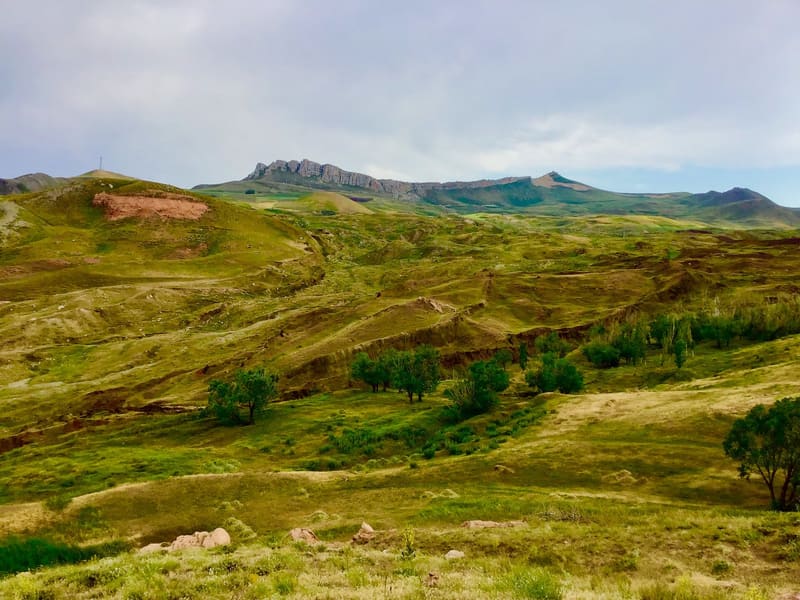
Wood fragments taken from the Durupınar site, a boat-shaped formation 29 kilometres south of the summit of Mount Ararat in Türkiye, have been dated to about 4,300 years ago. A US laboratory places them between 2400 and 2200 BC. Professor Cenker Atilla of Sivas Cumhuriyet University presented the results on 22 November. He called them “very interesting” because they match some proposed dates for the Flood. But the team’s deputy leader, Andrew Jones, cautions that the dating does not prove the formation is Noah’s Ark. Geologists who have studied the site have described it as a natural formation for decades. Results from Switzerland and Türkiye are still awaited. No detailed scientific report has been published yet.
The fieldwork ran from 28 June to 30 September 2026 near the village of Üzengili, in the Doğubayazıt district of Ağrı province. Around twenty researchers from five countries combined geophysics, geology and archaeology.
They collected pieces of wood and charred fragments, sent for carbon-14 dating to three laboratories: in the United States, in Switzerland and at TÜBİTAK, Türkiye’s state research council. Only the US results have come back. Two wood samples came out at about 4,300 years old.
A date is not proof
“According to the holy books, the Flood took place around 2300 BC. Our dating matches exactly those dates,” Cenker Atilla said. He is waiting for the other laboratories before a “final assessment”.
Andrew Jones, his deputy, is more careful. A match with some Flood chronologies does not show that the structure is the ark. Carbon-14 tells when a tree stopped living, not how the wood was used or how it got there. The team has not published full measurements, calibration data or the precise context of the samples.
A much-debated stone boat
The 164-metre formation was spotted on an aerial photo in 1959 by Turkish army captain İlhan Durupınar, who gave it his name. A 1960 expedition found only soil and rocks. Several geologists, including a specialist at Türkiye’s state mineral research institute, see it as a natural structure formed by a landslide.
The site still draws pilgrims and the curious. An official “Nuh’un Gemisi” (Noah’s Ark) road sign guides visitors there from Doğubayazıt.
Ararat, the Armenians’ mountain
For Armenians, the story strikes a chord. Mount Ararat, visible from Yerevan but located in Türkiye, appears with the ark on the Republic’s coat of arms. On the same day, the draft new Constitution published in Yerevan removed the description of that coat of arms from the basic law, leaving it to a law adopted by referendum.
Analysis
The dating is new data, not a discovery. Old wood in a volcanic, mountainous region is hardly impossible, and the team itself admits as much. The real test will come from the Swiss and Turkish laboratories, then from a full publication with method and context. Until then, headlines announcing “the ark found” deserve caution. For the diaspora, the debate mostly recalls Ararat’s place in the Armenian imagination, 111 years after the genocide that emptied the region of its Armenians.
Possible consequences
Results from the Swiss laboratory and TÜBİTAK are to be compared with the first ones. The team plans a joint final assessment, with no date set.