Armenia’s draft new Constitution drops the Declaration of Independence; Pashinyan promises “irreversible peace”
- Published
- Place
- Yerevan, Armenia
- Event date
- Past event —
Summary
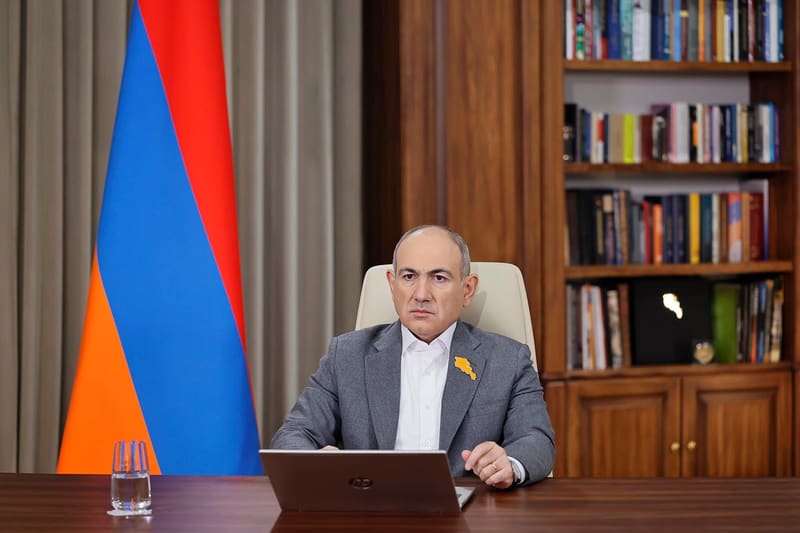
Armenia’s draft new Constitution was published on Monday 23 November, and it no longer refers to the 1990 Declaration of Independence. The Justice Ministry posted it on a dedicated website where every citizen can read it and propose changes. The text has 12 chapters and 89 articles, against 16 chapters and 220 articles today. Its Article 8 gives foreign policy a single goal: to ensure peace. In a 10 a.m. address to the nation, Nikol Pashinyan openly called it a “renunciation of the logic” of the 23 August 1990 Declaration, which he described as “the logic of conflict”. Once the Constitution is adopted, he pledged, Armenia will sign and ratify the peace treaty with Azerbaijan. The parliamentary system stays. The ruling majority is six votes short of calling the referendum.
The current preamble opens with “the Armenian people” and rests on the “national goals” of the Declaration of Independence. The new one begins: “We, the people of the Republic of Armenia.” It speaks of building an “independent, peaceful, secure and prosperous” state “within our internationally recognized territory”.
The change matters. The 1990 Declaration cites the 1 December 1989 decision on reunifying Soviet Armenia and Nagorno-Karabakh. Its point 11 backs international recognition of the 1915 genocide. Baku has made removing that reference a condition for signing the peace treaty initialled in Washington.
Pashinyan: “Not because of outside pressure”
The prime minister read the preamble live, then made the case for a “Fourth Republic” free of conflict. In his view, the Declaration’s logic fuelled emigration and bred “looters” hiding behind “Greater Armenia” rhetoric. He named Robert Kocharyan, Serzh Sargsyan and General Manvel Grigoryan.
“Never give in to the temptation to think we are doing this because of external pressure,” he said. He staked “all [his] political, human and moral credibility” on the outcome: after adoption, he said, Armenia will have “institutional, lasting and irreversible” peace.
What changes in the text
Armenia remains a parliamentary republic. Article 1 adds one word: the state is also “secular”, a provision listed among those that cannot be amended. The Armenian Apostolic Church keeps its recognised “exclusive mission” as the national church. But its relations with the state “are regulated” by law, rather than “may be regulated”.
The description of the coat of arms, with Mount Ararat and Noah’s Ark, leaves the Constitution. A law adopted by referendum will define the coat of arms, flag and anthem; current laws stay in force until then. Every future amendment will require a referendum. A transitional clause would also let parliament alone decide to leave an organisation joined through a ratified treaty, such as the Eurasian Economic Union.
Six votes and a referendum
Civil Contract lacks the two-thirds needed to put the text to a popular vote. Pashinyan renewed his offer to the opposition: if “no” wins, he resigns; if “yes” wins, he will not run for prime minister again. Opposition factions have already refused. The ruling party says the public debate will run until spring 2027.
Analysis
The government calls the reform a domestic matter. Yet the political core of the text answers Baku’s demand point by point: no Declaration of Independence, a foreign policy defined as peace, an “internationally recognized” territory. Pashinyan owns that choice and ties it to his own fate. The rest of the draft moves less than promised: the parliamentary system stays. For the diaspora, the stakes are twofold: genocide memory leaves the constitutional foundation along with the Declaration, and voting rights narrow.
Possible consequences
The text can still change during the public debate. Without six opposition votes, the referendum cannot be called, and the peace treaty with Azerbaijan remains tied to that step.