“Ancient Armenia”: Athens’ Acropolis Museum shows Armenia before Christianity
- Published
- Updated
- Place
- Athens, Greece
- Event date
- Past event —
Summary
The “Ancient Armenia” exhibition opens on Friday, 20 November, at the Acropolis Museum in Athens and runs until 28 February 2027. Admission is free. Organised with the History Museum of Armenia, it brings together nearly 200 objects, from prehistory to the dawn of Christianity. The core of the show is devoted to the kingdom of Urartu, in the Iron Age. Armenia’s Ministry of Education, Science, Culture and Sport announced it on Thursday, 19 November. According to the ministry, it is the first time the heritage of pre-Christian Armenia has been shown on this scale in Greece. With it, the Athens museum, one of the most visited in the country, launches a series of exhibitions on ancient civilisations less familiar to the public. Free guided tours are planned in Greek and English.
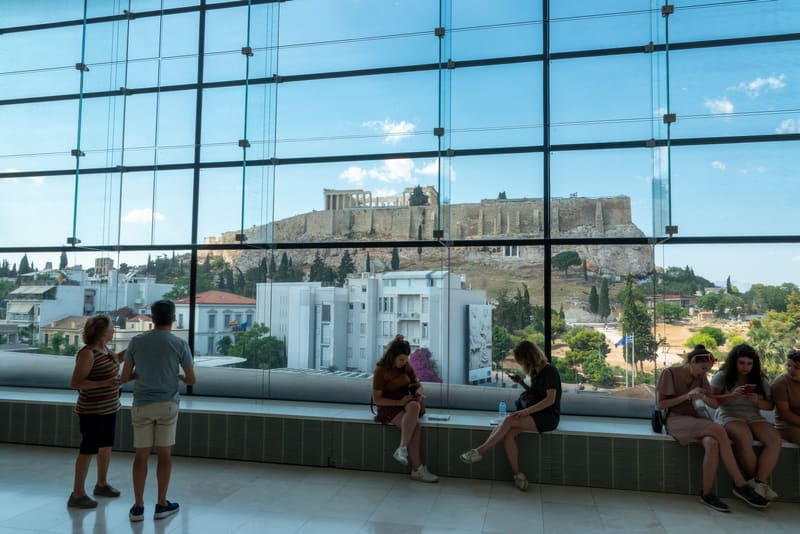
The exhibition is housed in the Temporary Exhibition Gallery, on the museum’s ground floor. Signage is in Greek and English. Visitors simply pick up a free ticket at the ticket desk.
The Armenian ministry speaks of more than 170 items from the History Museum of Armenia in Yerevan. About thirty objects have been lent by museums in Greece and Cyprus. The aim: to show the links between these ancient worlds.
Urartu at the centre
The exhibition has eight sections. It runs from the Palaeolithic to the start of the Christian era. Armenia adopted Christianity in the early 4th century. That is often the only period the public knows.
The museum wants to show what came before. The focus is on Urartu, a powerful Iron Age kingdom on the Armenian Highlands. Its relations with Assyria and the Near East carried ideas and symbols as far as the eastern Mediterranean.
On display: bronze helmets, shields and swords, ritual vessels, cuneiform tablets, jewellery and animal-shaped figurines. Among the highlights is a bronze deer, a typical example of the region’s metalwork. Objects from Cyprus, Crete and the Aegean tell the story of the exchanges.
“Two civilisations meet”
“Exploring Greek and Roman culture cannot happen in isolation from the surrounding regions,” says Nikolaos Stampolidis, director general of the Acropolis Museum. Hence this new series on lesser-known ancient cultures.
On the Armenian side, the ministry stresses the symbolic weight of the venue, at the foot of the Acropolis. It is, it says, a chance for “two civilisations with rich historical and cultural legacies” to meet, and to present Armenian heritage “in a new light”.
Free guided tours of about 45 minutes are on offer. In Greek, the first takes place on 20 November at 6 p.m. Athens time. In English, a session is scheduled for Sunday, 27 December, at 10 a.m. Groups are limited to 30 people, with online registration.
Analysis
For Armenia, the stakes go beyond culture. Exhibiting at the Acropolis Museum means reaching the audience of one of Europe’s most visited sites. The choice of Urartu is no accident: it is a reminder that the history of the Armenian Highlands begins long before Christianity and is linked to the Greek and Mediterranean world. The exhibition also reflects steady cultural cooperation between Yerevan, Athens and Nicosia. Whether it will later travel to other European capitals has not been announced so far.
Possible consequences
The exhibition is open from 20 November 2026 to 28 February 2027, during museum hours. Admission and guided tours are free, with a ticket.