Kapan: medieval copper sceptre found in the former capital of Syunik
- Published
- Place
- Kapan (Syunik, Armenia)
- Event date
- Past event —
Summary
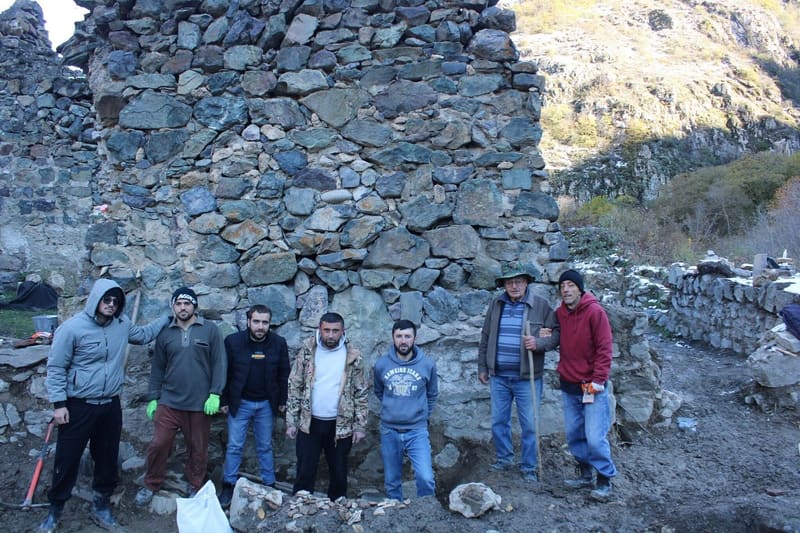
A copper sceptre head, a symbol of power, has been discovered near Kapan in southern Armenia. The find was made at the site of Old Kapan, the former capital of the Kingdom of Syunik, in the area of the royal citadel and palace. The Institute of Archaeology and Ethnography of Armenia’s Academy of Sciences announced it on Monday 16 November. Archaeologists also unearthed parts of a clasp from a parchment manuscript, two coins, a fragment of medieval glass and iron nails. A furnace of dressed stone, probably used to heat water for a bathhouse, was also uncovered. The sceptre has already been handed over to the Kapan museum. The excavations, launched in 2024 and funded by the Syunik regional administration, are due to stop for the winter in the coming days.
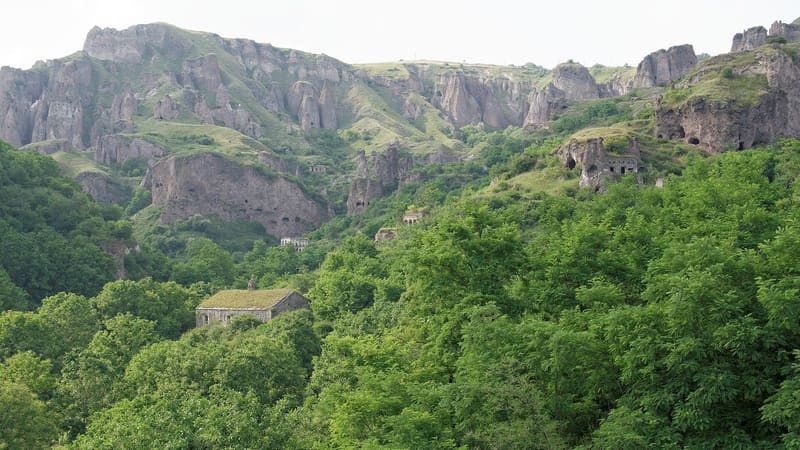
The site lies south of Kapan, the capital of Syunik province, on the right bank of the Voghji River. It is entirely covered by forest. The expedition is led by archaeologist Gagik Sargsyan. This year’s season resumed in mid-October.
A forgotten royal capital
Old Kapan is mentioned as early as the 5th century. In the 10th century it became the region’s political and cultural centre: the capital of the Kingdom of Syunik, founded in 987. After the kingdom fell, the town was abandoned and forgotten.
The site was listed as a historical monument in Soviet times. But these are the first large-scale, systematic excavations, according to Gagik Sargsyan. A fortified enclosure and a section of a defensive tower about four metres high can still be seen.
Basilica, press and baths
In 2025, archaeologists uncovered the foundations of an early medieval three-aisled basilica beneath a later palace building. The church had a horseshoe-shaped apse and a stone-paved floor. A press, whose stone has survived, was also found.
This year, a furnace of carefully dressed stone appeared at the edge of the site. Researchers believe it was used to heat water for the baths. Bathhouses and utility buildings probably stood in this area.
On 10 November, beneath a layer of soil, the team found two coins, a shard of glass, iron nails and rivets from the same period, and fragments of pottery.
The weather has the last word
This year’s work will end in the coming days, Gagik Sargsyan said. The weather is already hampering the dig.
Analysis
A sceptre, a manuscript clasp, heated baths: these objects sketch a real medieval court life, far from Yerevan. For Syunik, a border region usually discussed in terms of security or the TRIPP route, the dig recalls another story: that of an Armenian kingdom with its own seat of power. Regional funding also shows local interest in a heritage that could one day attract visitors. Laboratory analysis and future seasons will still be needed to date each object precisely.
Possible consequences
The sceptre is now kept at the Kapan museum. Excavations will resume in a future season.