TRIPP route: Moscow demands that Russian and Iranian interests be taken into account, Pashinyan reassures Tehran
- Published
- Place
- Moscow (Russia) and Yerevan (Armenia)
- Event date
- Past event —
Summary
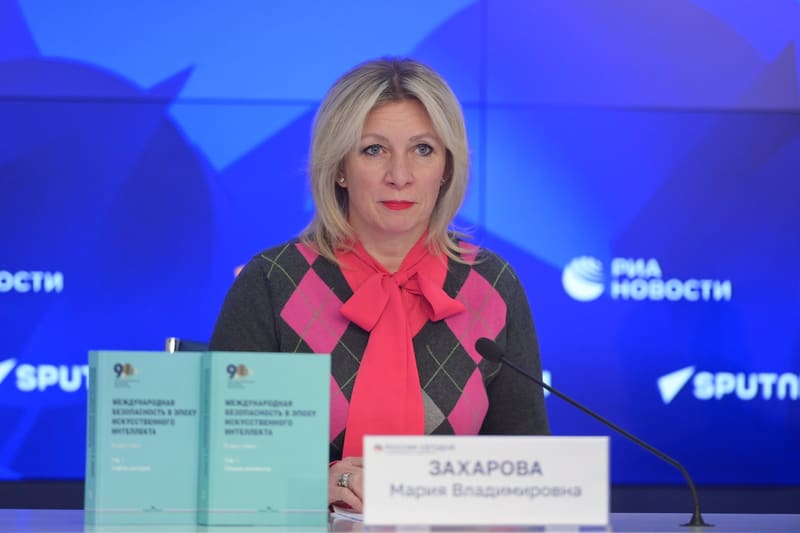
Russia wants the TRIPP route, which is to cross southern Armenia, to take its interests and Iran’s into account. Otherwise the project is “doomed to failure”, warned Maria Zakharova, the Russian Foreign Ministry spokeswoman, at her weekly briefing on Thursday 26 November. In her view, the Armenian-American initiative raises “more questions than answers”: no timetable, parameters or terms of use have been published. On the same day, she called remarks by German Foreign Minister Johann Wadephul on Armenia’s Constitution “interference”. In Yerevan, Nikol Pashinyan addressed the other neighbour: Armenia respects Iran’s “red lines”, and TRIPP will not cross them. The messages come a week before the Armenian Prime Minister’s visit to Moscow on 3 December.
Three days after the official launch of TRIPP on 23 November, Moscow spelled out its position. Russia considers it “fundamental” that the project’s implementation takes its interests and Iran’s into account, Maria Zakharova said. According to her, the targets, parameters and construction timetable remain unknown. So do the terms of access to the infrastructure and the prospects for freight.
“This project must not create new dividing lines in the region. Otherwise, this transport and logistics initiative is simply doomed to failure,” she added.
“A copy” of the three-way work, says Moscow
For the spokeswoman, the “Trump Route” largely repeats what had been prepared by the Russia–Armenia–Azerbaijan working group, co-chaired by the three countries’ deputy prime ministers. It provided for transit between Azerbaijan and Nakhchivan through southern Armenia. But also for fully reopening Armenia’s rail network towards Turkey, Iran and Russia. Yerevan froze its participation in the group in 2023, she recalled.
Moscow also points to practical obstacles: Russian border guards on the Armenian-Iranian border, the Russian rail gauge, and the concession on Armenia’s railways granted until 2038 to South Caucasus Railway, a subsidiary of Russian Railways. Armenia also remains a member of the Eurasian Economic Union. Yet Russia says it is ready to consider taking part in the project.
Wadephul accused of “interference”
Maria Zakharova also took aim at Johann Wadephul. On 21 November, on German public broadcaster ARD, the minister said Armenia must change its Constitution for the peace treaty with Azerbaijan to be signed. That is “interference in the internal affairs of a sovereign state”, she said. “The Armenian people must take such decisions on their own, without unsolicited advice from outside.”
She accused the European Union of trying to push Russia out of the South Caucasus. And she said the regional “3+3” platform “will be activated at the next stage”.
Pashinyan to Tehran: “no dark corners”
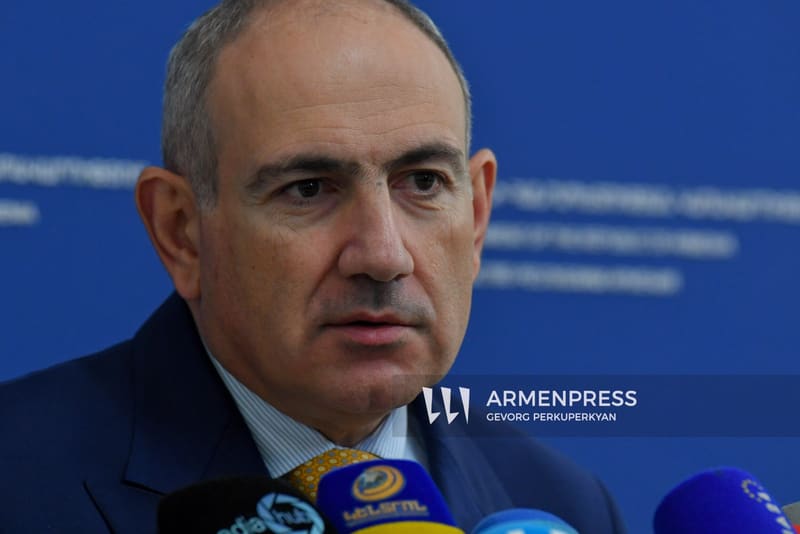
In Yerevan on the same day, Nikol Pashinyan sought to reassure Iran. Armenia respects Iran’s red lines, and TRIPP has not crossed them and will not cross them “in any way”, he said after the Cabinet meeting. Any military presence is ruled out under the project. Yerevan maintains a constant dialogue with Tehran, and “there are no dark corners”, he added.
Just before the TRIPP launch, Iranian Foreign Ministry spokesman Esmaeil Baghaei had warned that Tehran would not rely on Armenian assurances alone and would closely monitor implementation.
Analysis
Moscow is not rejecting TRIPP: it wants a seat at the table. By pointing to its border guards and the rail concession running to 2038, Russia shows it still holds concrete levers in southern Armenia. The alignment with Tehran is no coincidence: both neighbours fear a lasting American presence on their doorstep. Nikol Pashinyan is trying to hold all the threads at once: partnership with Washington, guarantees to Iran, dialogue with Moscow. His 3 December visit to the Kremlin will show whether this balance convinces Vladimir Putin.
Possible consequences
The shareholders’ agreement of the TRIPP company, approved on Thursday by the Armenian government (74% for the US side, 26% for Armenia), is due to be signed within a week. Nikol Pashinyan meets Vladimir Putin in Moscow on 3 December.
Sources
This story is based on the following public sources:
- Sputnik Arménie — am.sputniknews.ru,
- Arminfo — arminfo.info,
- Aurora News — auroranews.am,
- Sputnik Arménie — am.sputniknews.ru,
- Nouvelles d’Arménie — armenews.com,
- Sputnik Arménie — am.sputniknews.ru,
- Nouvelles d’Arménie — armenews.com,
- PAN.am — pan.am,
- Service de presse du Conseil de la Fédération (via Wikimedia Commons) — commons.wikimedia.org,