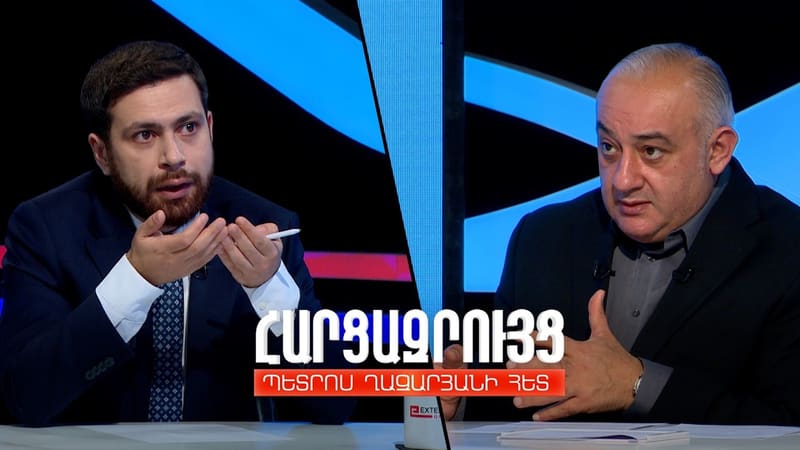
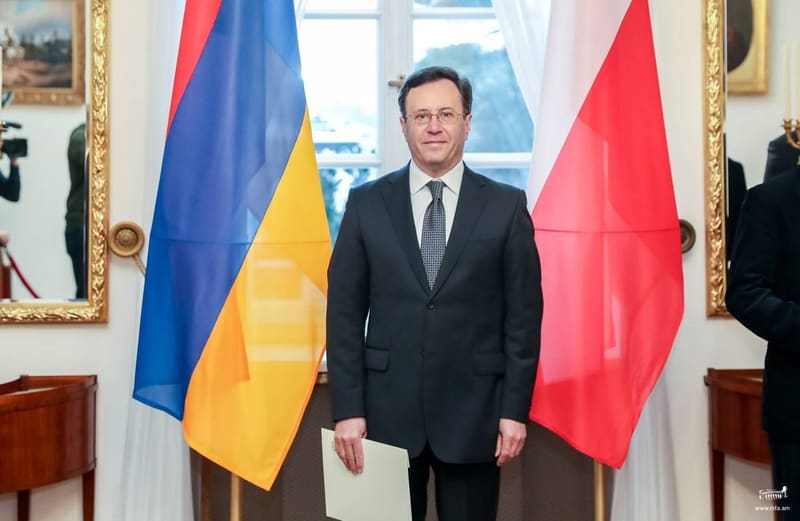
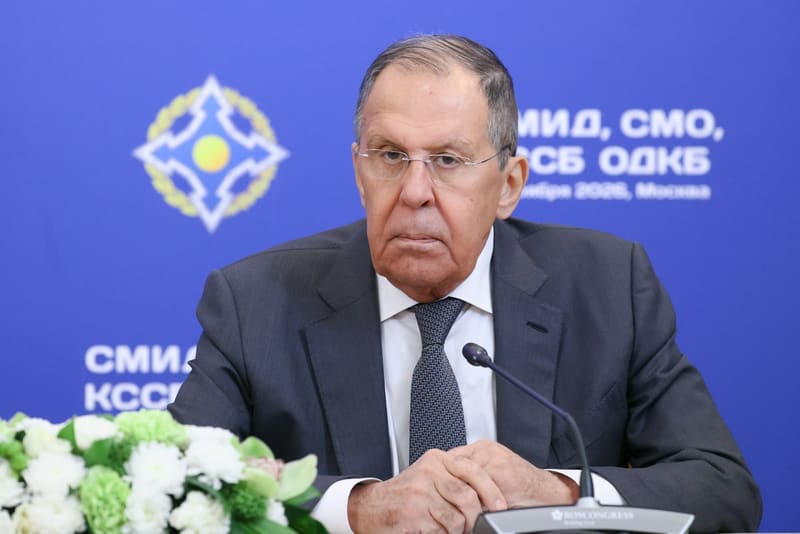
Pashinyan wants Armenia to do without Russian border guards and refuses to repeal EU law
- Published
- Place
- Yerevan
- Event date
- Past event —
Summary
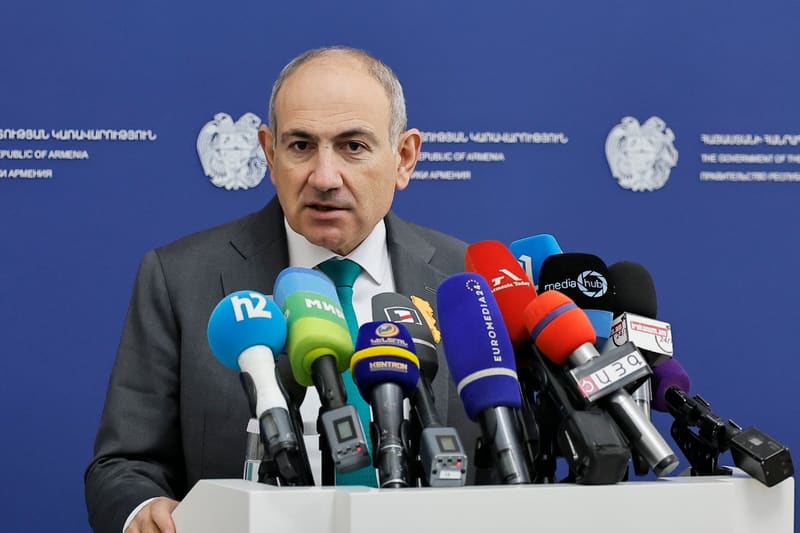
Nikol Pashinyan wants Armenia to guard all its borders on its own “in the coming years”, which will end the mission of the Russian border guards stationed there since 1992. The prime minister said so on Thursday, 26 November, at his press briefing in Yerevan. He also called it “impossible” to repeal the law launching Armenia’s process of joining the European Union. “We cannot retreat,” he insisted. The tone remained conciliatory: Yerevan does not want to “harm” Russia. The remarks come a week before his visit to Moscow on 3 December, where he is due to meet Vladimir Putin. In October, Armenia’s exports fell 25.4% year on year.
The question came from reporters after the Cabinet meeting: on which sections of the border will Armenians replace the Russians? Nikol Pashinyan gave neither a map nor a timetable. “We are grateful to the Russian border guards for having stood at our borders all these years. But I think that in the coming years we must fully assume responsibility for protecting them,” he said.
Under a 1992 agreement, border guards from the FSB, Russia’s security service, have watched Armenia’s borders with Turkey and Iran. They left Zvartnots airport in August 2024, then the Agarak checkpoint on the Iranian border in early 2025.
The EU law “impossible” to repeal
A reporter asked what he would do if Moscow demanded the repeal of the EU accession law during his upcoming visits. The answer was blunt: “I do not consider the repeal of that law possible.”
He gave two reasons. The law came from a civic initiative, “not a decision made by the government or a narrow political circle”. And the law and the debate around it were part of the parliamentary elections, in which a majority of voters backed it, he said. Parliament passed the law in 2025.
What if the Eurasian Economic Union (EAEU) does not lift the restrictions on Armenia? “We cannot cancel the decisions made on cooperation with the European Union. That would not be serious. We must move forward; we cannot retreat,” the head of government replied.
With Moscow, “solutions, not concessions”
“We have not had, do not have and will not have any desire, intention or goal to harm Russia. We expect the same from Russia,” Nikol Pashinyan said. He would rather talk with Moscow “not about concessions, but about solutions”.
He will travel to Russia three times in December, including on 3 December for a working visit and talks with Vladimir Putin. The first issue he named was Armenia’s railway, run since 2008 by a subsidiary of Russian Railways. “Our main task is to find out whether the Russian side is ready to make significant investments in it,” he said.
Exports: down 25.4% in October
Since late April, Moscow has restricted imports of many Armenian products: mineral water, brandy, wine, flowers, fruit and vegetables, fish. According to preliminary figures from the Statistical Committee, Armenia’s exports fell 25.4% in October compared with October 2025.
Nikol Pashinyan says the diversification of exports is “proceeding successfully”. He still wants to settle the dispute within the EAEU. “We do not think we are the only ones who need it. The EAEU needs it too, so that the union does not lose its appeal,” he added.
Analysis
Nikol Pashinyan heads to Moscow with two red lines on display: no going back on the European law, no retreat on sovereignty over the borders. Yet the departure of the Russian border guards is framed without a break, with thanks and without a date. The conciliatory tone aims to keep talks open on the trade restrictions, whose cost the Armenian economy is now measuring. The question is whether the Kremlin will accept this equation: cooperating with an Armenia that does not give up its European course. The 3 December meeting will offer a first clue.
Possible consequences
Next step: Nikol Pashinyan’s working visit to Moscow on 3 December, with talks planned with Vladimir Putin. No timetable has been set for the end of the Russian border guards’ mission.
Sources
This story is based on the following public sources:
- NEWS.am — news.am,
- Anadolu — aa.com.tr,
- DW — dw.com,
- Armenpress (agence d’État) — armenpress.am,
- NEWS.am — news.am,
- Noyan Tapan (nt.am) — nt.am,
- Radio publique d’Arménie — ru.armradio.am,
- Aysor.am — aysor.am,
- NEWS.am — news.am,
- NEWS.am — news.am,
- Sputnik Arménie — am.sputniknews.ru,
- AveNews (Comité statistique) — avenews.am,