Karabakh displaced: Armenia set to extend temporary protection to end of 2027
- Published
- Place
- Yerevan, Armenia
- Event date
- Past event —

Summary
Displaced people from Karabakh will keep their temporary protection status in Armenia for another year, until 31 December 2027. That is the aim of a draft decision on the Armenian government’s agenda for Thursday, 19 November. The status currently expires on 31 December 2026. The text leaves the door open to a further extension. The stakes are very practical: keeping the identity documents of tens of thousands of people valid. Abroad, their passport bearing the “070” code is only valid together with the temporary protection certificate. And these papers are required to apply for Armenian citizenship. Applications are soaring: 2,154 in the second half of 2025 and 6,929 in the first half of 2026, according to the draft’s explanatory note.
The draft amends government decision No. 1864-N of 26 October 2023. That text created temporary protection status for Armenians from Nagorno-Karabakh, right after Azerbaijan’s offensive of 19 September 2023 and the exodus that followed.
The draft is published on e-draft.am, the official portal for draft legislation. It is due to be examined by the Cabinet on Thursday, 19 November, according to the state news agency Armenpress.
A “070” passport that cannot travel alone
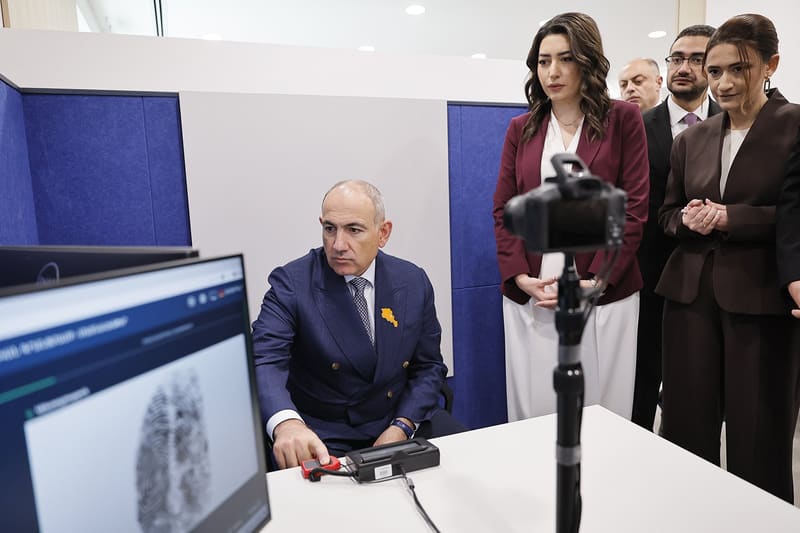
Displaced people hold a special Armenian passport whose barcode carries the code 070. Outside Armenia, this passport is only valid together with the temporary protection certificate, also called the refugee certificate. The two documents go together.
As a result, when a 070 passport expires, the certificate must be replaced too. Without an extension of the status, many families would have found themselves with expired papers on 1 January 2027.
The status covers people registered in Nagorno-Karabakh’s population register, those whose last registered address was there, and people registered by the Migration Service after the exodus. It does not apply to citizens of another state.
Armenian citizenship in sight
The government justifies the measure by the rise in citizenship applications. To become a citizen, a holder of temporary protection must present a valid identity document. The draft therefore aims to “ensure the continuity” of these documents and to “reduce administrative obstacles” caused by their expiry.
According to the European Commission’s annual report on Armenia, cited by EVN Report, more than 115,000 displaced people have been received. More than 34,000 had already obtained Armenian citizenship through the expedited procedure by mid-March 2026.
The measure adds to other recent extensions: the monthly allowance paid to certain categories of displaced people runs until June 2027, and the housing certificates of those displaced in 2020 until 1 July 2027.
Analysis
The text is technical first of all. But it affects the daily lives of tens of thousands of families: travelling, working, getting medical care, filing paperwork. Choosing one renewable year shows that the state is managing a transition: temporary refugee status remains a safety net while naturalisation advances. The pace of applications tripled in a year. Many displaced people therefore seem to have chosen to settle permanently in Armenia, three years after the exodus.
Possible consequences
If the Cabinet adopts the draft on Thursday, 19 November, the status and the documents that depend on it will remain valid until 31 December 2027.