“My conscience torments me”: Pashinyan stands by “Azerbaijan” in the passports of Artsakh Armenians
- Published
- Place
- Yerevan (Armenia)
- Event date
- Past event —
Summary
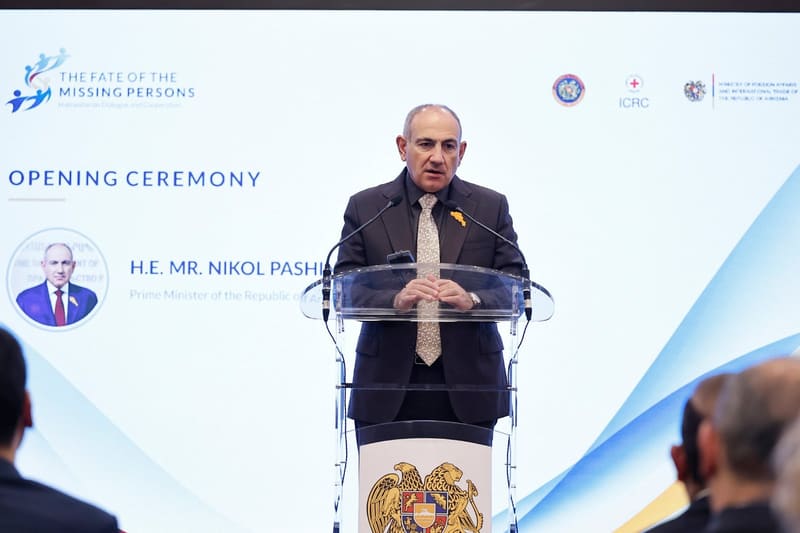
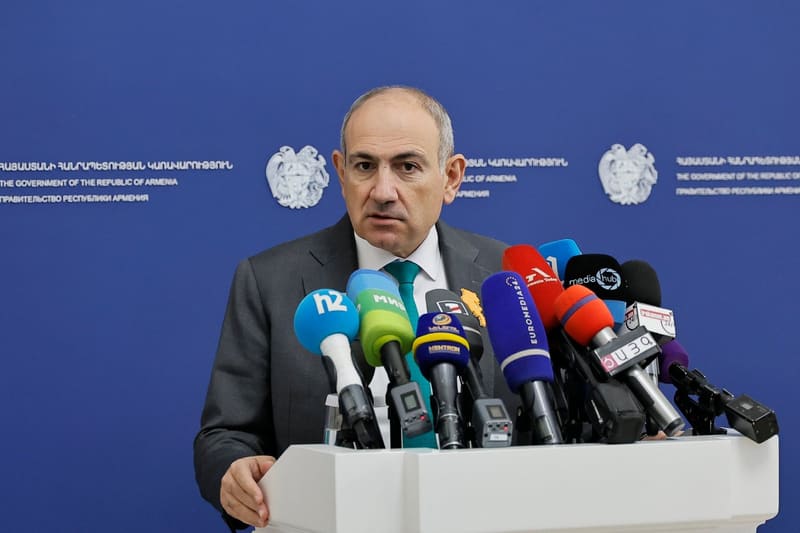
Nikol Pashinyan is standing by the decision to list “Azerbaijan” as the place of birth in the new passports of Armenians displaced from Artsakh. “My conscience torments me, yes, terribly,” the Prime Minister admitted on Thursday 26 November at his press briefing in Yerevan. But he said the choice follows from the peace agreement initialled with Baku. “Either Yerablur expands, or we stay within the framework of the initialled peace agreement. It is a very simple political choice,” he said, referring to Yerevan’s military pantheon. On the same day, people displaced from Nagorno-Karabakh protested outside the government building. Security Council Secretary Alen Simonyan told them: “Where were they born?” Former Artsakh State Minister Artak Beglaryan said the remarks amount to an admission that this is a political decision, not a requirement of the international standards cited by the Interior Ministry.
The question came from a reporter, a week after a tense exchange at the same lectern. On 19 November, Nikol Pashinyan called journalist Hripsime Jebejyan “despicable” as she showed him photos of Yerablur. That hill in Yerevan is where soldiers who fell for Armenia and Artsakh are buried. On Thursday, he was asked whether his conscience troubled him.
“Of course my conscience torments me. How could you imagine otherwise? Yes, a lot, terribly,” the Prime Minister replied. He immediately linked the answer to the passports. That is precisely why, he said, the place of birth of “our compatriots from Karabakh” must follow the principles of the peace agreement initialled with Azerbaijan in Washington on 8 August 2025, “so that Yerablur does not expand”.
He added that he is the first Armenian leader under whom the pantheon has not expanded for a total of two years and eight months.
Outside the government: “Artsakh is Armenia”
At the same time, a group of people displaced from Nagorno-Karabakh was protesting outside the government building. “Writing ‘Azerbaijan’ instead of ‘Artsakh’ in the passport of a citizen of the Republic of Armenia is suicide,” said Anastas Israelyan, head of the NGO Reviving Artsakh. He accused the authorities of a policy of “Turkification”.
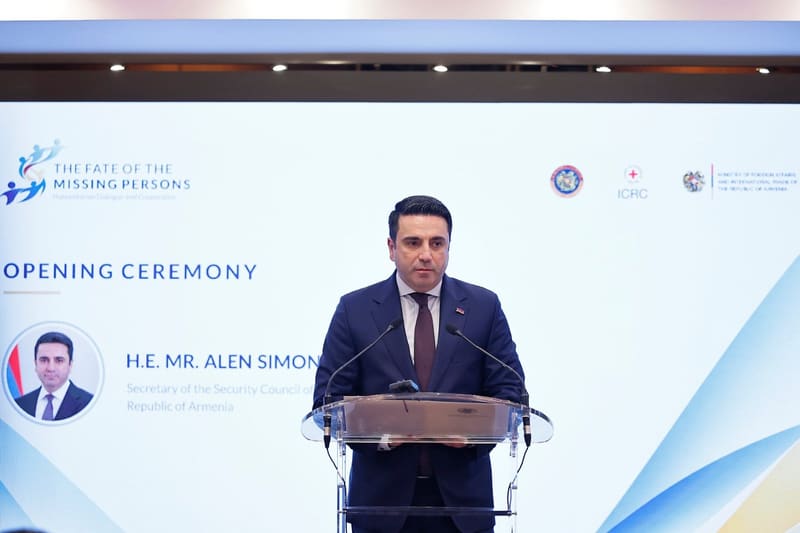
As he left the building, Security Council Secretary Alen Simonyan was met with shouts of “Shame!”. “I love you all very much, too,” he replied. Then, on the substance: “Where were they born? Did a country called ‘Artsakh’ exist when they were born? […] They are the ones who dissolved Artsakh.” The protesters chanted: “Artsakh is Armenia, full stop.”
International standards or a political choice?
The Interior Ministry defends a technical rule. On 19 November, its Migration and Citizenship Service cited the ICAO 9303 standard on passports and the ISO 3166 standard, the official list of countries. On 24 November, in parliament, Minister Arpine Sargsyan explained that Armenia chose to list the country rather than the city, to avoid problems at border crossings. She said the place names the displaced want to see do not appear in international lists.
Artak Beglaryan, a former Artsakh state minister, disagrees. For him, the Prime Minister’s words prove the decision is “purely political”. He suggests writing what the birth certificate says: “USSR”, “Armenia”, or the locality under its original name. Or leaving the field blank. The Artsakh Union also argues that neither ICAO nor ISO requires the word “Azerbaijan”.
More than 32,000 displaced adults have already obtained Armenian citizenship. The new biometric passports have been issued since 1 November.
Analysis
Nikol Pashinyan is no longer hiding behind technical rules alone. By linking a passport field to the risk of war, he makes it part of his peace policy with Baku, and owns it. That fits his “Real Armenia” line. But the argument weakens the ministry’s defence, which rested on international standards. For the Armenians driven out of Nagorno-Karabakh in September 2023, the wound is above all symbolic: seeing, in an Armenian document, the name of the country that forced them out. The row now adds to the battle over the new Constitution.
Possible consequences
No change to the rule has been announced. Displaced Artsakh Armenians are preparing appeals, including to international bodies.
Sources
This story is based on the following public sources:
- Sputnik Arménie — am.sputniknews.ru,
- Aurora News — auroranews.am,
- Noyan Tapan (reprise Azatutyun) — nt.am,
- The Armenian Report — thearmenianreport.com,
- Panorama.am — panorama.am,
- Sputnik Arménie — am.sputniknews.ru,
- Aysor — aysor.am,
- NEWS.am — news.am,
- Arminfo — arminfo.info,
- Sputnik Arménie — am.sputniknews.ru,
- Armenpress (agence d’État) — armenpress.am,
- Services du Premier ministre d’Arménie — primeminister.am,