Missing persons: Armenia still has about a thousand cases, Alen Simonyan to visit Azerbaijan in December
- Published
- Place
- Yerevan, Armenia
- Event date
- Past event —
Summary
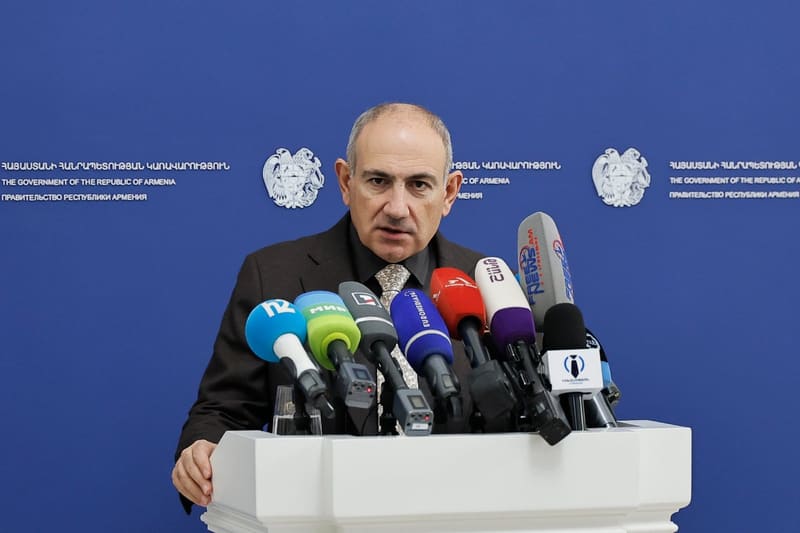
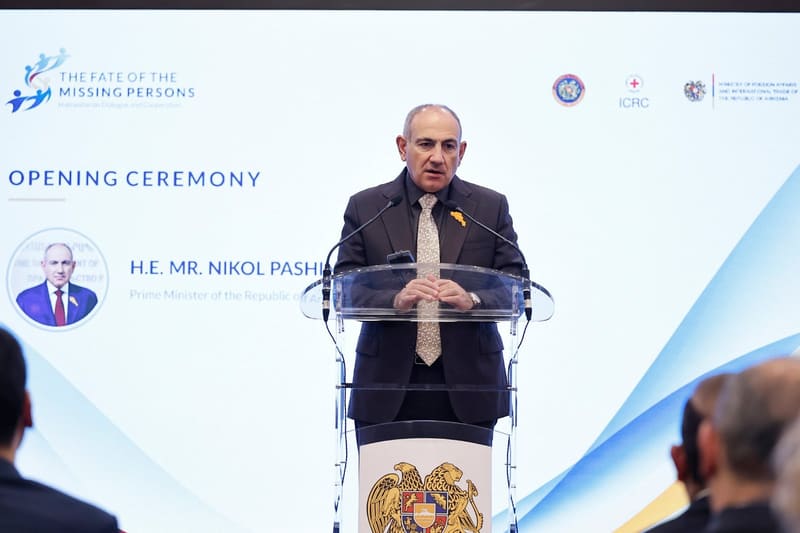
About 1,000 people are still listed as missing in Armenia, 777 of them since the early 1990s. Nikol Pashinyan gave the figure on Thursday, 19 November, in Yerevan, as he opened an international conference titled “The Fate of Missing Persons: Humanitarian Dialogue and Cooperation”. The other cases date from the 2020 war and the clashes that followed. For the prime minister, the solution lies first in cooperation with Azerbaijan. “The answers to our questions are in Azerbaijan, and vice versa,” he said. The same day, Security Council Secretary Alen Simonyan announced he would travel to Azerbaijan in December, but not to Baku. It will be a return visit, after President Ilham Aliyev’s aide Hikmet Hajiyev came to Armenia in June. The conference continues on Friday, 20 November.
The conference brings together government members, international and regional experts, human rights defenders and families of the missing. The logo of the International Committee of the Red Cross (ICRC) appeared on the screen at the opening ceremony.
Nikol Pashinyan spoke of one of “the most painful issues of our time”. The key word, he said, is “unknown”. Families want precise answers. Often, there simply are none yet.
Mistrust on both sides
The prime minister acknowledged a problem of trust. Some relatives of the missing suspect the government of hiding information. He said he had personally met dozens of families and was keeping nothing secret.
The same mistrust exists between Yerevan and Baku. Each capital believes the other holds information it does not share. Pashinyan said the talks held in Dublin also covered more “institutionalised” cooperation on the missing. He pledged to help families work directly with organisations such as the ICRC.
A law since May, stronger forensic capacity
Foreign Minister Ararat Mirzoyan spoke of people “missing or forcibly disappeared” during the fighting of the 1990s, of 2020 and of later operations. A law on persons missing as a result of military operations has been in force since May. An interagency commission deals with prisoners of war, hostages and the missing.
Alen Simonyan highlighted progress in forensic and forensic genetic expertise. In his view, peace with Azerbaijan opens new possibilities on these humanitarian files. “Peace must also be tangible for the families who are still waiting for news,” he said.
A trip to Azerbaijan, a Security Council set to change
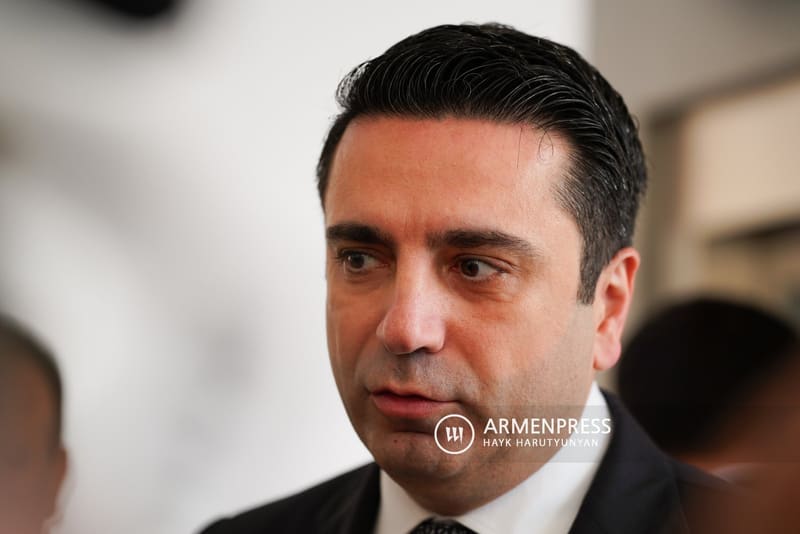
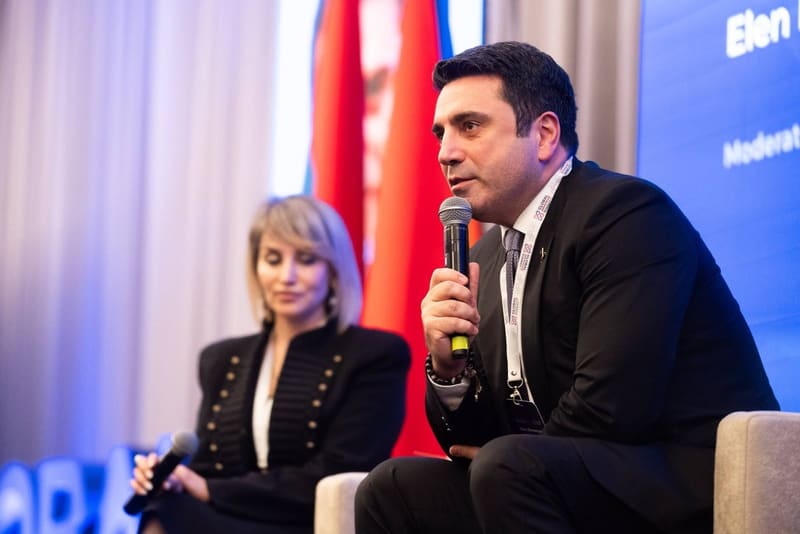
Speaking to reporters, Alen Simonyan said his visit to Azerbaijan would take place next month, outside Baku. Cooperation and technical issues will be on the table. Hikmet Hajiyev had been received on 14 June in Dilijan by Armen Grigoryan, then Security Council secretary. Representatives of Azerbaijani NGOs are also expected in Armenia at the end of November under the “Peace Bridge” initiative.
The future of his own institution is less certain. The draft new Constitution no longer provides for the Security Council as a constitutional body. A security structure will remain, possibly in the form of a national security adviser. Simonyan does not rule out taking another post: “it is for the prime minister to decide”.
Analysis
The missing persons file is one of the most sensitive in the peace process. It affects thousands of families and feeds distrust of the authorities, which Pashinyan himself acknowledged. By taking it to an international conference, Yerevan is looking for methods and outside support, notably from the ICRC. The government presents cooperation with Baku as the only effective route. But the exchange of information has yet to be built, and each side suspects the other of holding back. Simonyan’s visit in December will be a concrete test of that dialogue.
Possible consequences
The conference continues on 20 November. The exact date and venue of Alen Simonyan’s visit to Azerbaijan have not been announced. The draft Constitution is due to be published in the coming days.