Artsakh: report lists 31 Armenian sites destroyed or seized, from Stepanakert’s cathedral to cemeteries
- Published
- Place
- Artsakh (Nagorno-Karabakh)
- Event date
- Past event —
Summary
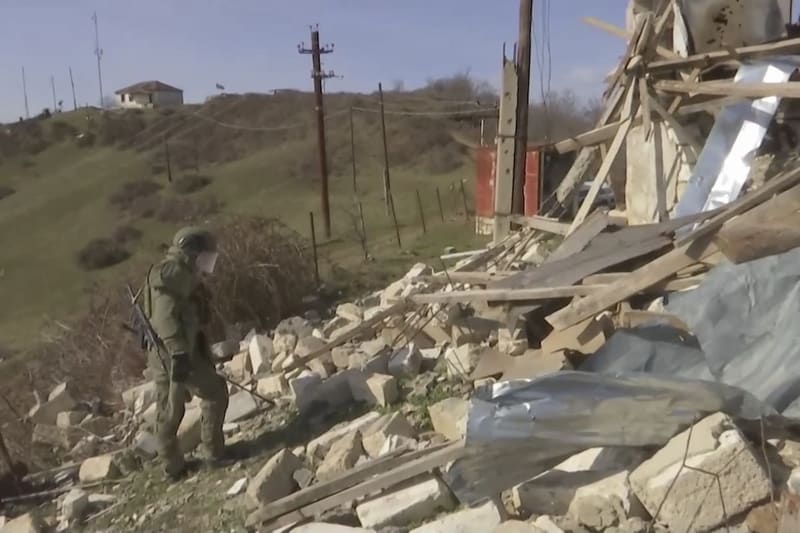
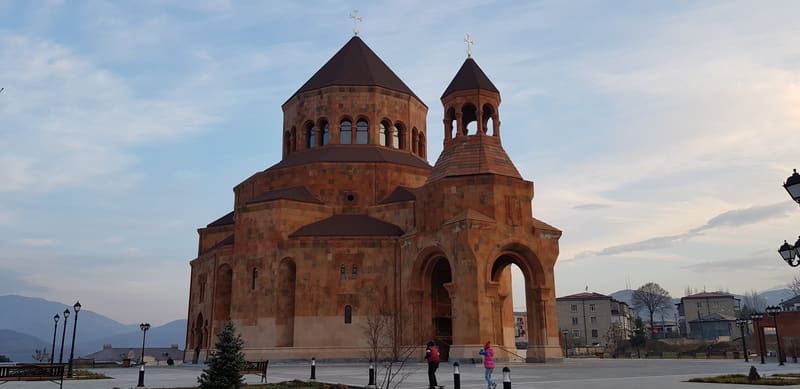
Three Armenian NGOs published a report on Tuesday 24 November documenting the erasure of the Armenian presence in Artsakh (Nagorno-Karabakh) since 2020. Churches razed, neighbourhoods demolished, cemeteries desecrated: their summary table lists 31 sites or groups of sites. They include Stepanakert’s Holy Mother of God Cathedral, consecrated in 2019 and razed in spring 2026, and Shushi’s Church of St John the Baptist, known as Kanach Zham. The report is signed by the Artsakh Union, the International and Comparative Law Center and the NGO Rule of Law, with support from the French-Armenian association Support to Artsakh. The authors rely on satellite imagery, videos posted online, some of them by Azerbaijani servicemen, and accounts from displaced people. Their conclusion: by wiping out homes and monuments, Azerbaijan is in effect denying Artsakh Armenians their right to return.
The document is titled “The Destruction of the Armenian Trace in Artsakh”. It runs to almost 80 pages, in Armenian and English. Its four authors include Artak Beglaryan, president of the Artsakh Union, and Gegham Stepanyan, Artsakh’s human rights ombudsman.
The method follows the Berkeley Protocol, a UN guide for open-source investigations. The authors compare before-and-after satellite images, cross-check each case against at least two sources where possible, and separate war damage from demolitions carried out after the fighting. They acknowledge that they have no access to the ground and that their list is not exhaustive.
Churches wiped off the map
The most recent case is Stepanakert’s cathedral. Consecrated in 2019, it came through the 2020 war and the September 2023 offensive intact. It was razed and its site then “landscaped”. Caucasus Heritage Watch, a Cornell and Purdue universities programme, dates the demolition to between 3 March and 2 April 2026. Radio Free Europe confirmed it on satellite images from 26 April. Stepanakert’s St Jacob Church, completed in 2007, vanished in the same period.
In Shushi, the Kanach Zham church, built in 1847, was razed under the guise of “restoration”, the report says. Ghazanchetsots Cathedral, hit twice in 2020, has been altered. The town’s genocide memorial has been demolished. The report also lists churches in Berdzor, Tandzatap and Mekhakavan.
Whole neighbourhoods and cemeteries
Homes have not been spared. In Stepanakert, apartment blocks and old houses on Tumanyan and Martuni streets have made way for a “Victory Park”. The village of Karin Tak was destroyed and a mosque built there. Artsakh’s parliament building, demolished in 2024, was replaced by a hotel opened in the presence of Ilham Aliyev in July 2024.
The cemeteries of Haterk and Vaghuhas were demolished and the one in Sghnakh flattened. In Shushi, the statue of commander Vazgen Sargsyan was beheaded.
The “Great Return”, a barrier to return
Finally, the report targets Azerbaijan’s “Great Return” programme, approved in 2022. Azerbaijani families are being settled in Armenian homes, notably in Aknaghbyur. For the NGOs, this is a direct denial of the right of return.
They point to two orders of the International Court of Justice. The order of 7 December 2021 requires Baku to prevent and punish vandalism against Armenian heritage. The order of 17 November 2023 requires that Armenians who left after 19 September 2023 be able to return safely. Baku, for its part, denies any deliberate destruction.
Analysis
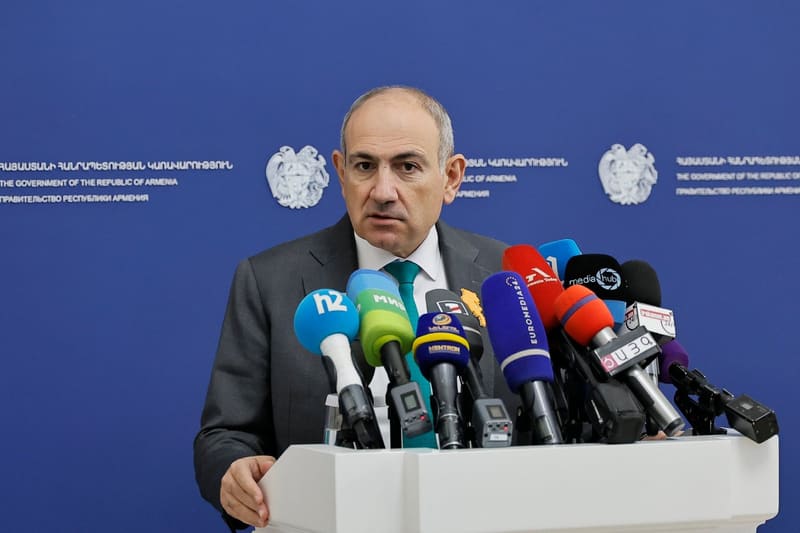
The report lands the day after a day of peace symbols: the launch of the TRIPP route and the publication of a draft constitution without the Declaration of Independence. The contrast is stark. In the spring, Nikol Pashinyan called for “prudence” and said he did not want to raise heritage at the international, state-to-state level. The file therefore rests on civil society and the diaspora. This evidence-gathering, satellite image against satellite image, has a clear aim: to make sure the memory of Karabakh does not depend on the ups and downs of a negotiation.
Possible consequences
The NGOs are asking the international community for urgent measures to stop the destruction, protect what remains and guarantee Artsakh Armenians a return “in safety and dignity”.
Sources
This story is based on the following public sources:
- Union de l’Artsakh / ICLaw / Rule of Law (rapport) — artsakhunion.org,
- PAN.am (via Sputnik Armenia) — pan.am,
- ABC Media — abcmedia.am,
- Noyan Tapan — nt.am,
- Caucasus Heritage Watch (Cornell/Purdue) — caucasusheritage.cornell.edu
- RFE/RL — rferl.org