Iran says it is ready to build an oil refinery in Armenia
- Published
- Place
- Tehran, Iran
- Event date
- Past event —
Summary
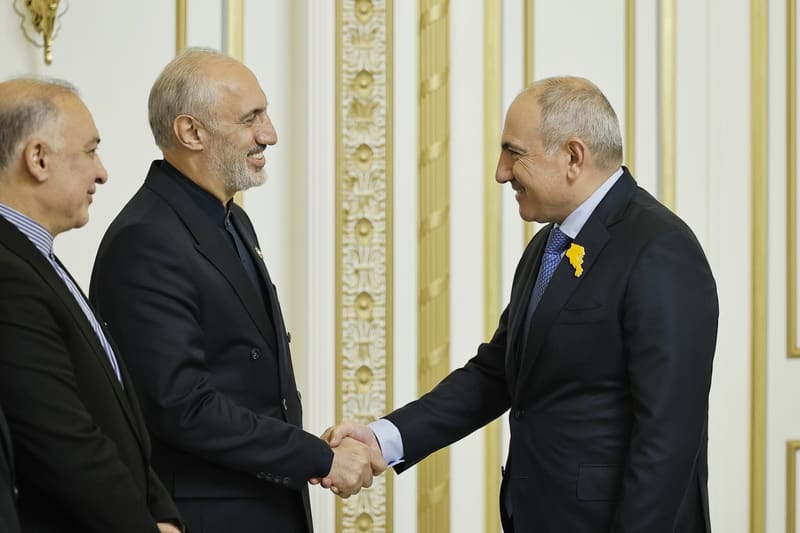
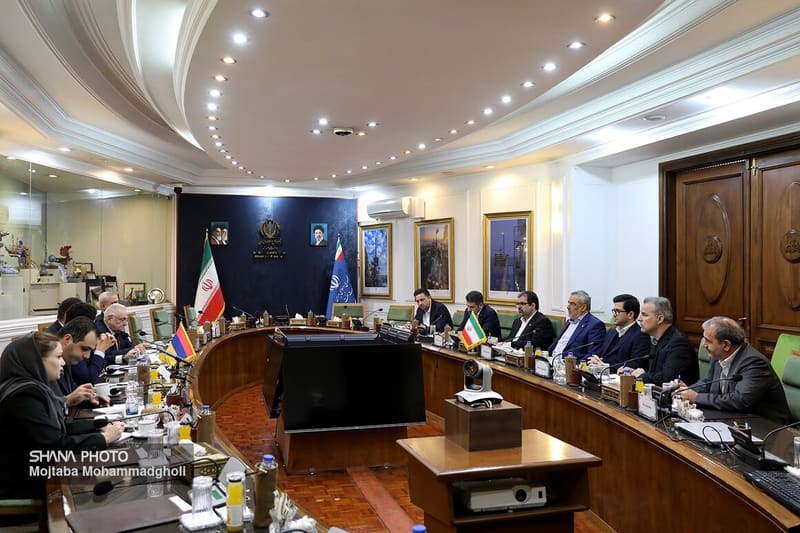
Iran is ready to build an oil refinery in Armenia using its technical and engineering capabilities, Iran’s acting Oil Minister Hamid Bovard said in Tehran on Tuesday 17 November. He was hosting Armenia’s Minister of Territorial Administration and Infrastructure, Davit Khudatyan. According to Bovard, “productive” talks were held on the participation of Iranian private companies in the project. Tehran is now waiting for Yerevan’s proposals. The Iranian minister also said he was ready to export liquefied petroleum gas (LPG) to Armenia “without any restrictions” and to help build the necessary infrastructure. Khudatyan met Iranian Vice President Hamid Pourmohammadi and Energy Minister Abbas Aliabadi the same day. No figures or agreement were announced.
The visit was short and tightly focused on energy. Davit Khudatyan arrived in Tehran less than a week after the 19th session of the Armenian-Iranian intergovernmental commission, held in Yerevan.
At Iran’s Oil Ministry, Hamid Bovard highlighted his country’s experience. “Trust Iran’s experience in the oil industry, because it was gained under the harshest sanctions,” he said, according to the ministry’s news agency, Shana. He said his ministry sets “no ceiling” on cooperation with Armenia.
Refinery, LPG and new gas routes
Three offers were put on the table. First, the refinery, involving Iranian private companies and firms linked to the Iranian oil workers’ pension fund. Second, LPG, which Tehran offers to supply with no volume limit. Third, “new routes” for gas trade, whose technical aspects the Iranian ministry offered to study.
Both sides agreed to send these proposals to their joint working group. That is where they are to be reviewed technically.
Gas for electricity, the core of the relationship
For his part, Davit Khudatyan recalled the gas-for-electricity arrangement that has linked the two countries for years: Armenia receives Iranian gas and pays back in electricity. He said Armenia was interested in wider trade in gas and petroleum products, including with Iran’s private sector.
With Vice President Hamid Pourmohammadi, he discussed increasing electricity exchanges. The Iranian official also pledged to make the Norduz crossing on the Armenian border Iran’s busiest land gateway within a year. The Armenian minister posted a video of the meetings on his Facebook page.
Analysis
Armenia has no oil refinery. It imports all of its fuel, mostly via Georgia. A refinery built with Iran would reduce that dependence, but nothing has been committed yet: no site, capacity or financing has been announced. The project would also have to contend with US sanctions targeting Iran’s oil sector. Tehran’s offer comes as Yerevan diversifies its partners, from the European Union to the TRIPP route. For Iran, wary of that route running along its border, it is a way to remain an indispensable energy partner on Armenia’s southern flank.
Possible consequences
The Iranian proposals now go to the joint working group. Yerevan must decide whether to put forward a refinery project and in what form.