Armenian railway: Armenia-Russia working group on the Russian Railways concession meets for the first time in Yerevan
- Published
- Place
- Yerevan, Armenia
- Event date
- Past event —
Summary
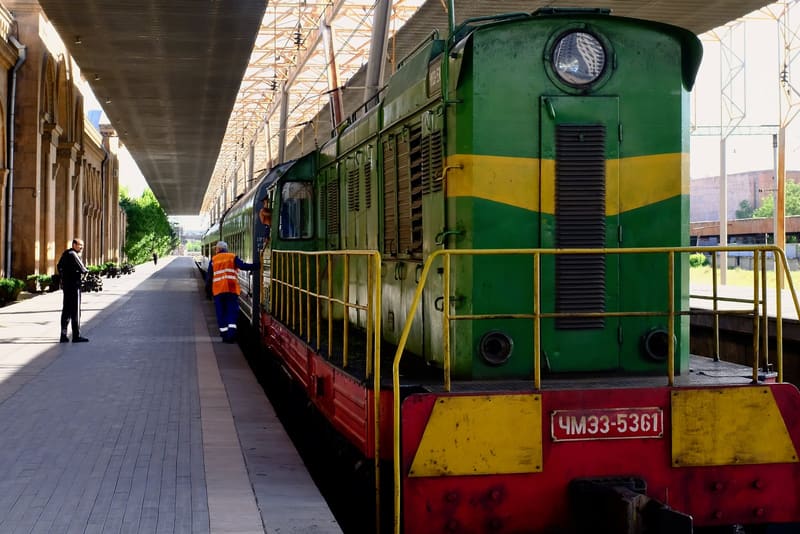
The Armenian-Russian working group on the future of Armenia’s railway met for the first time on Tuesday, 17 November, in Yerevan. The talks are being held behind closed doors, without the press, at the Ministry of Territorial Administration and Infrastructure. Deputy Minister Davit Ivanyan leads the Armenian side. Russia is represented by Deputy Transport Minister Alexei Shilo and Russian Railways (RZD) deputy chief executive Vyacheslav Pavlovsky. Since 2008, Armenia’s network has been run by South Caucasus Railway, an RZD subsidiary, under a thirty-year concession. Since February, Nikol Pashinyan has argued that Russian management is hurting the country and has proposed handing the concession to a third country. Moscow refuses and points to its investments. Set up in October, the group has three months to make progress.
No statement was planned after the session. The ministry’s spokesperson only confirmed that the talks had begun. The agenda fits on one line: the operation of Armenia’s rail network.
The format was born on 14 October. That day, a delegation led by RZD chief Oleg Belozerov met the Armenian government. Instead of a break-up, the two sides announced they would keep working together. Belozerov said he was open to a joint assessment of how well the concession works. According to Nikol Pashinyan, the group must propose ways to make Armenian rail more competitive.
A concession signed in 2008
The agreement dates from 13 February 2008. It hands operation of the network to South Caucasus Railway for thirty years, until 2038, with a possible ten-year extension. Tracks and stations remain the property of the Armenian state. To extend the contract, each side must submit an offer to the other before August 2027.
RZD says it has paid no dividends and reinvested everything. Oleg Belozerov puts investment between 2008 and 2025 at about $396 million. Moscow warns that any change to or termination of the contract will have to take this into account.
What Yerevan wants
Nikol Pashinyan opened the debate in February. In his view, Russian management deprives Armenia of strategic positions and competitive advantages. Western sanctions on Russia, he argues, deter investors and carriers from using the network. He proposed that a third country on good terms with both Yerevan and Moscow buy the concession. He named Kazakhstan, the United Arab Emirates and Qatar, though none is an official bidder.
In late August he floated a price of $350–400 million, without any written offer. Russian Deputy Prime Minister Alexei Overchuk replied that Russia saw no reason to give up its rights. Vladimir Putin, for his part, ties any new investment to freight volumes, which could grow if the region’s borders open.
A busy week with Moscow
The meeting opens a dense sequence between the two capitals. By decision of Nikol Pashinyan, Economy Minister Gevorg Papoyan travels to Moscow on Wednesday and Thursday. He will take part in consultations on Eurasian Economic Union (EAEU) trade policy and priority industrial sectors.
In the background, another file remains open: Russian restrictions on Armenian products, whose review by the Eurasian Commission was postponed twice in early November.
Analysis
Rail has become a test of Armenian-Russian relations. Yerevan wants to plug into new routes: the Kars-Gyumri line to Turkey and the TRIPP route through Syunik. For the government, a network run by a sanctioned Russian company complicates these plans. Moscow defends a valid contract and hundreds of millions invested. The closed doors and the lack of a statement show that nothing is settled. The group has only three months. Its conclusions will show whether the two countries are heading for a sale, a renegotiation or an adjusted status quo.
Possible consequences
The group’s three-month mandate runs until roughly mid-January. No date has been announced for a second meeting or for public conclusions. The August 2027 deadline for a possible extension of the concession weighs on the talks.