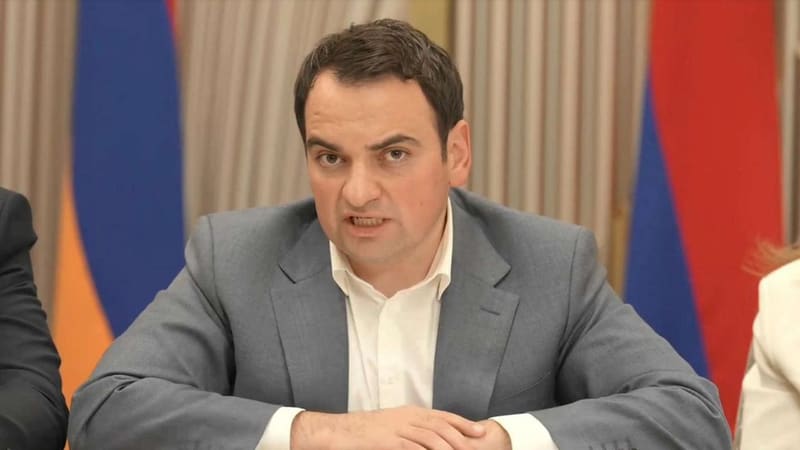
New constitution: draft ready since March, public debate will run into 2027, Srbuhi Galyan warns
- Published
- Place
- Yerevan, Armenia
- Event date
- Past event —
Summary
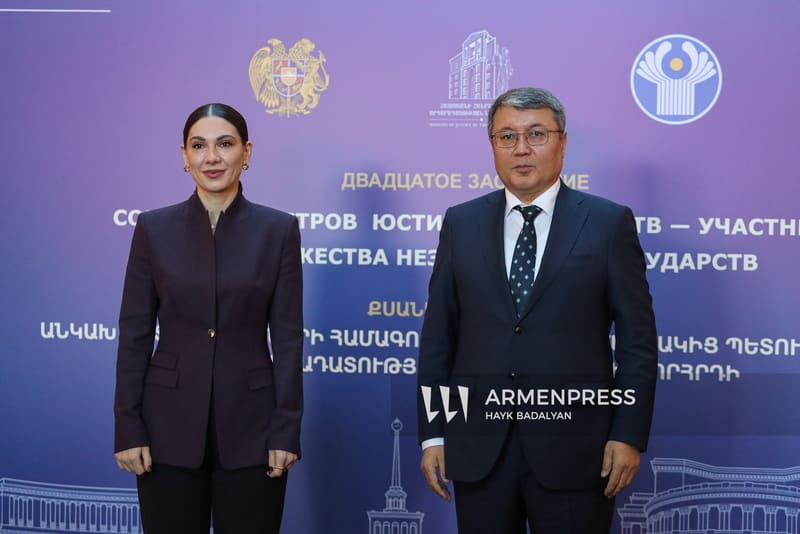
The draft of Armenia’s new constitution has been ready since March, but its public discussion cannot be completed by the end of the year. Justice Minister Srbuhi Galyan said so on Tuesday, 10 November, in Yerevan, on the sidelines of the 20th session of the Council of Ministers of Justice of the Commonwealth of Independent States (CIS). She said publication had been delayed to improve the document, more than 95% of which has already been reviewed by the Constitutional Reform Council. The text is due to be made public this month and will remain a draft: the minister urged citizens to read it critically. The final version is to be put to a referendum. On Armenian prisoners held in Azerbaijan, she said the issue was so sensitive that talking about it could harm them.
Srbuhi Galyan spoke to reporters after a morning devoted to legal cooperation between former Soviet countries. The text of the new constitution “was ready back in March”, she explained. Its discussion and publication were simply postponed to give time to refine the document.
The Constitutional Reform Council has already reviewed more than 95% of it. The minister believes it will have time to meet once more before publication. But she warned that, even once published, the text will remain a draft. “The most important thing is that the people of Armenia become familiar with it and form their own opinion,” she said.
A slipping timetable
The government had announced publication in November. On 2 November, Nikol Pashinyan confirmed this before parliament, promising a public discussion “for as long as necessary”. The same day, the minister said the provisions on the Armenian Apostolic Church would remain unchanged.
What has changed is the horizon. A broad public discussion cannot be wrapped up before the end of 2026, Srbuhi Galyan now acknowledges. The version that emerges from this debate, which she wants to be a “consensus” text, will then be put to a referendum. No date has been given.
The stakes go beyond domestic politics. Baku makes signing the peace agreement, initialled on 8 August 2025, conditional on removing the reference to the 1990 Declaration of Independence from the preamble of the current constitution. That text refers to reunification with Nagorno-Karabakh.
Prisoners in Baku: “a sensitive issue”
Asked about Armenians held in Azerbaijan, the minister said the matter was so sensitive that raising it publicly could be harmful. The relevant institutions work on it every day, she said. She accused the opposition of asking repeated questions in parliament to create the impression that it cares more than the government does. “That cannot be the case,” she replied.
The CIS in Yerevan, all the same
The day’s meeting had a paradoxical feel. Armenia, which is drifting away from Moscow, hosted the 20th session of the CIS Council of Ministers of Justice. Delegations signed cooperation agreements between ministries. Yerevan proposed creating a new body: a methodological council of civil registry services. Participants also discussed 2027, declared the “Year of Legal Awareness” in the CIS, and an Uzbek project for a common electronic exchange system between justice ministries.
Srbuhi Galyan said Armenia and Russia were preparing a memorandum on mutual legal assistance, whose provisions are being coordinated. The same day, the CIS secretary general noted that Yerevan had not announced any intention to leave the organisation.
Analysis
The slipping timetable is no detail. The longer the debate lasts, the further the referendum recedes, and with it the signing of a peace deal that Baku ties to the constitution. The government is betting on time to avoid a defeat at the ballot box. Since the 7 June parliamentary elections, the ruling Civil Contract party no longer holds the two-thirds majority needed to amend the constitution through parliament. It therefore has to win over voters. On the prisoners, the line remains one of discretion, at the risk of leaving the field to the opposition.
Possible consequences
The draft of the new constitution is due to be published in November, then put to a public discussion that will continue into 2027. The referendum date has not been set.