Visa-free Europe: Armenia targets 2029 as the government adopts its 2026-2031 action plan
- Published
- Place
- Yerevan, Armenia
- Event date
- Past event —
Summary
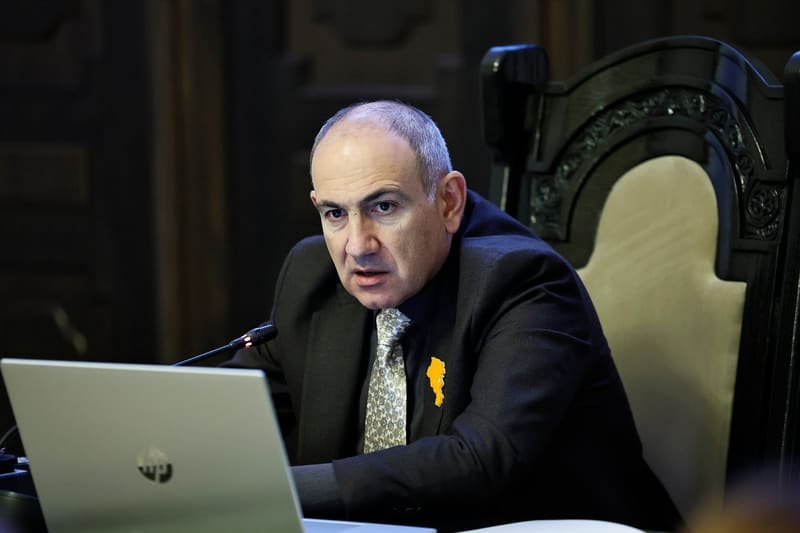
Armenians could travel to the European Union without a visa in 2029. That is the deadline Nikol Pashinyan now considers “more realistic”, as he told the cabinet in Yerevan on Thursday 19 November. The same day, the government adopted its 2026-2031 action plan: 733 measures in six areas, from peace with Azerbaijan to building 300 schools. Visa liberalisation sits in the foreign policy and security chapter. To get there, the prime minister is counting on the new biometric passports, issued since 1 November, on border management reform and on digitalisation. Also on Thursday, Armenia and the EU welcomed progress on the visa liberalisation action plan at their Partnership Committee. Brussels also confirmed an extra €18 million for its support to Armenia’s economy.
“We have set the goal of achieving visa liberalisation with the EU in 2029. I think 2029 is more realistic,” Nikol Pashinyan said as he opened the debate on the action plan. In practice, it means being able to visit the Schengen area for a short stay with just a passport, without applying for a visa.
The prime minister listed the work ahead. The biometric passport is “a very significant step”. Border management now has to be reformed, automated control systems installed at every border crossing and digitalisation continued. “Citizens should quickly feel the change, starting with the quality of services when they travel,” he said.
733 measures over five years
The plan was presented by Deputy Prime Minister Mher Grigoryan and adopted with no votes against. It turns the five-year programme approved by parliament in August into action: each measure has a deadline, a responsible body and an indicative budget.
The targets are ambitious: average growth of 6% a year, 125,000 new jobs, exports of Armenian-made goods at least doubled and poverty cut by 5 points. The government also pledges to build or renovate 300 schools, 100 kindergartens, 2,500 km of roads and 40 bridges, to commission 1,000 megawatts of solar power and to extend health insurance to the whole population.
In foreign policy, the plan aims to consolidate peace with Azerbaijan and deliver the “Crossroads of Peace”, including the TRIPP route. Foreign Minister Ararat Mirzoyan added full normalisation with Turkey, the opening of borders and closer ties with the EU “with a membership perspective”. Adopting a new Constitution is also part of the plan.
Brussels welcomes progress
The same day, Armenia and the EU held their 7th Partnership Committee in Yerevan, the body that monitors their 2017 agreement. Both sides welcomed progress on the visa liberalisation action plan across its four blocks: document security, borders and migration, public order, and fundamental rights.
They also pointed to the €270 million “Resilience and Growth” plan, topped up by an extra €18 million, and to duty-free access, for two years, for around 80% of Armenian exports to the EU. The EU has also mobilised €30 million for Armenia’s armed forces under the European Peace Facility. The meeting was co-chaired by Deputy Minister Vahan Kostanyan and Audronė Perkauskienė of the European External Action Service.
Analysis
2029 is now the official horizon, written into a government plan. It is a commitment by Yerevan, not yet a promise from Brussels: the EU welcomes progress but has set no date, and the decision is the EU’s, member states included. The timetable depends mainly on technical reforms, borders, migration, the fight against corruption, that Armenia has to carry out itself. For the diaspora the stakes are concrete: families split between Yerevan, Paris or Los Angeles could one day visit each other without consular paperwork.
Possible consequences
EU assessment missions to Armenia will continue. A digital system to monitor the action plan is due in 2027. The preliminary draft of the new Constitution is due to be published next week.
Frequently asked questions
When will Armenians be able to travel to the EU without a visa?
The Armenian government is aiming for 2029. The European Union welcomes progress but has set no date; the final decision is the EU’s.
Is a biometric passport required?
Yes, the biometric passport is a key condition for a future visa-free regime. Armenia has been issuing it since 1 November 2026.
What is in the 2026-2031 action plan?
733 measures in six areas, including a 6% annual growth target, 125,000 jobs, 300 schools, 2,500 km of roads and EU visa liberalisation.