Lake Sevan: whitefish fishing banned from 20 November to 1 February
- Published
- Place
- Lake Sevan, Armenia
- Event date
- Past event —
Summary
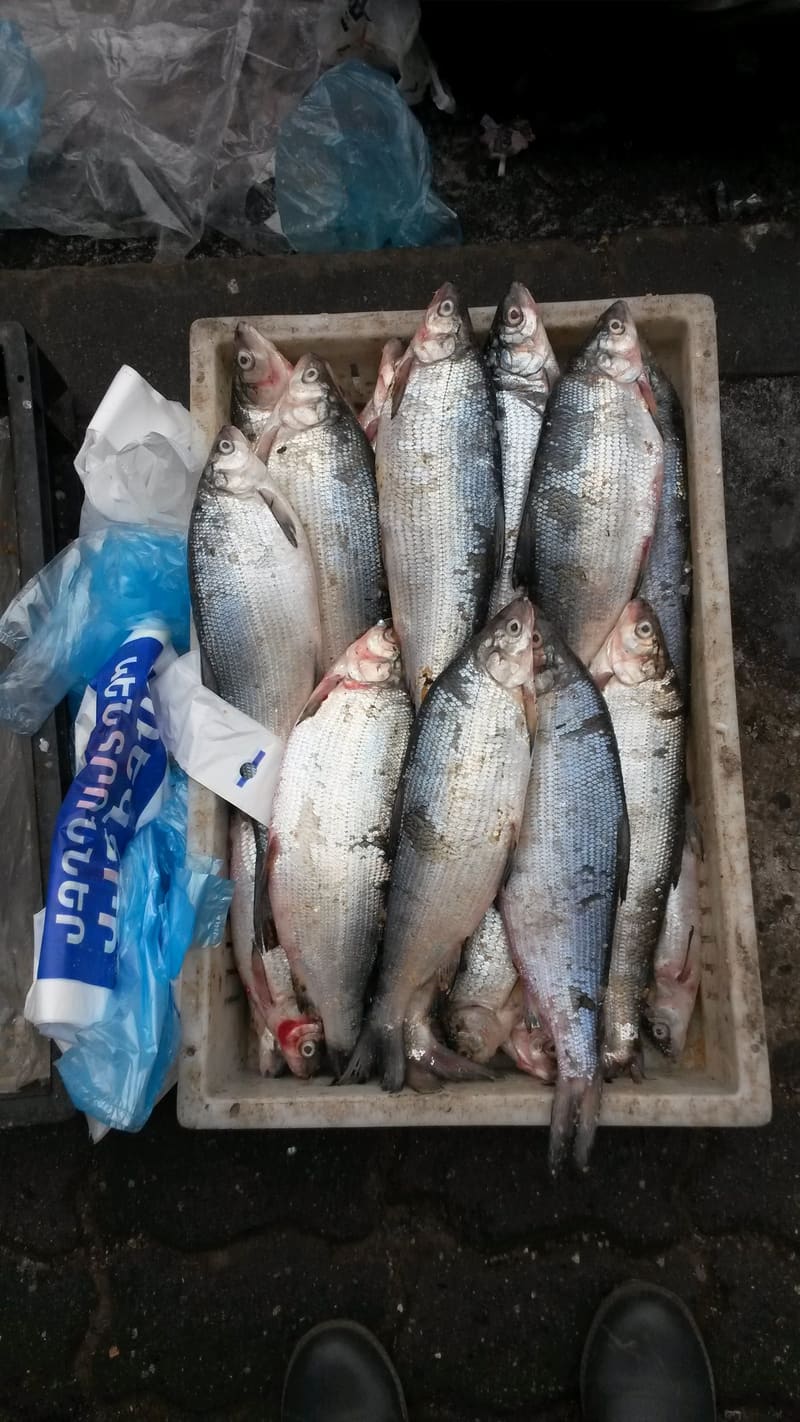
Commercial fishing for sig, the whitefish that is Lake Sevan’s most fished species, will be strictly banned from Friday 20 November 2026 to 1 February 2027. The eco-patrol service of Armenia’s environmental inspectorate issued the reminder on Sunday 15 November. The measure stems from a government decision of 5 February 2026. The aim is to let the fish reproduce naturally, curb the decline in stocks and help the lake’s ecosystem recover. After 20 November, no boats or fishing gear may remain on the lake. Owners are urged to remove them before the deadline. Offenders face administrative and even criminal penalties. For consumers, it marks the end of the season: fresh Sevan sig should become scarcer at market stalls until February.
The dates are not random. In the government decision, they match the sig’s “pre-spawning and spawning” period, when the fish reproduces.
Not a single boat on the water
The eco-patrol’s message is blunt. “After 20 November, there must be no boats or gear used for fishing on Lake Sevan,” its statement says, as carried by Tert.am, Aysor and NEWS.am. Every case of illegal fishing or rule-breaking “will receive a legal assessment”.
The head of the service, Vladimir Kirakosyan, visited the regional offices in Kotayk and Gegharkunik, the two provinces bordering the lake. He took stock of the problems there: the most sensitive areas and the equipment of control posts. He told his teams to focus on preventing poaching and on explaining the rules to residents.
A tightly managed season
The same decision sets the rules for the 2026 season. The sig catch quota is 550 tonnes. A fish must be at least 30 centimetres long to be caught. Fishing must take place at least 500 metres from the shore, with nets whose mesh is at least 80 millimetres.
Contracts to exploit the lake’s resources ran from 6 February to 20 November. No commercial quota was set this year for crayfish or crucian carp.
Sevan under watch
The ban comes on top of another measure. On 12 November, the government decided to ban exports of sig roe, “Sevan caviar”, for six months from 2 January 2027.
According to figures cited by Sputnik Armenia, sig stocks rose from about 2,670 tonnes in 2019 to some 3,590 tonnes in 2025. Specialists believe a healthy lake could hold nearly 10,000 tonnes. The recovery is real, but still fragile.
Analysis
Sig is an economic resource as much as an everyday fish. For Sevan’s fishermen, the season stops dead for two and a half months. The difference lies in enforcement. The authorities promise stepped-up patrols and criminal prosecution: a clear signal to poachers. The stakes go beyond one season. Together with the caviar export ban, the state is showing it wants stocks to recover, even at the cost of slowing sales in the short term. The challenge now is to keep up checks all winter.
Possible consequences
Commercial sig fishing will reopen on 1 February 2027 at the earliest. Boats and nets must leave the lake before 20 November.