Armenian prisoners in Baku: France calls their fate a precondition for normalisation
- Published
- Place
- Paris, France
- Event date
- Past event —
Summary
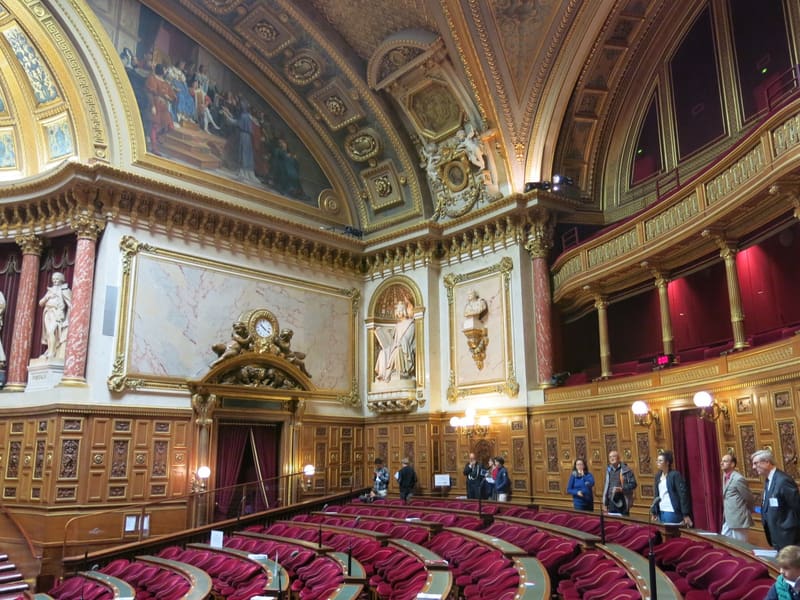
For the French government, settling the fate of Armenians held in Azerbaijan is a precondition for normalisation between Yerevan and Baku. Foreign trade minister Nicolas Forissier said so in the French Senate on Tuesday 10 November. He was answering Marie-Arlette Carlotti, a Socialist senator for the Bouches-du-Rhône. The minister welcomed the return of four detainees to Armenia on 14 January and called for the release of everyone arbitrarily detained. He recalled that France had unequivocally condemned Azerbaijan’s offensive in Nagorno-Karabakh. He pledged to adapt aid for displaced people to their current needs. And he defended the right of those who wish to go home to do so freely and safely. A video of the exchange has since been shared on social media.
The question dates back to February. Marie-Arlette Carlotti filed it on 5 February 2026 in the Senate’s Official Journal, addressed to the minister for Europe and foreign affairs. She asked what France is concretely doing for the refugees of Artsakh and to secure the release of Armenian political prisoners held in Azerbaijan. The answer came in the chamber this week, from Nicolas Forissier, on behalf of the government. The senator posted the video on 10 November.
In her text, the Marseille senator speaks of Marseille as the “first city of refuge” for Armenians, home, she says, to more than 80,000 people of Armenian descent. And she warns that solidarity “cannot be seasonal”.
What the government said
The minister put the prisoners at the heart of the peace process. Unresolved humanitarian issues must be handled within the normalisation between the two countries, he said. And resolving the prisoners issue is a precondition. He urged Armenia and Azerbaijan to keep their commitments, arguing that recent progress opens a chance for lasting peace in the South Caucasus.
On Nagorno-Karabakh, Nicolas Forissier recalled that Paris had unequivocally condemned Baku’s military operation and regretted the departure of almost the entire Armenian population. France, he said, provided the largest humanitarian aid for receiving displaced people. He also cited the provisional measures ordered by the International Court of Justice on 17 November 2023.
Who the detainees are
On 5 February 2026, the Baku military court sentenced fifteen Armenians, five of them to life imprisonment. Among them is Arayik Harutyunyan, former president of Nagorno-Karabakh. On 17 February, businessman Ruben Vardanyan, a former state minister of Artsakh, was sentenced to twenty years in prison. Amnesty International called the trial a travesty.
According to his wife, Veronika Zonabend, Ruben Vardanyan has not been able to meet his lawyer since 25 August. Four detainees, by contrast, were returned to Armenia on 14 January, a step Paris welcomed.
Silence in Dublin
The timing gives the answer more weight. Two days later, on 12 November, Nikol Pashinyan and Ilham Aliyev met in Dublin. Their joint readout mentions transit, trade, electricity and rivers. It says nothing about the detainees.
Analysis
The key word is “precondition”. For Paris, peace is not only about roads and power lines. It also runs through Baku’s prisons. That is a useful position for the families. But it is one sentence, spoken by a foreign trade minister on behalf of a colleague, during oral questions. It says nothing about the means France intends to commit. Meanwhile, Baku and Yerevan issue joint readouts in which the detainees no longer appear. The gap between the two discourses is the real story.
Possible consequences
The ministry’s written answer is due to be published in the Senate’s Official Journal. The Armenian detainees remain in prison in Baku.