Being able to make plans in Armenia
- Published
- Place
- Armenia
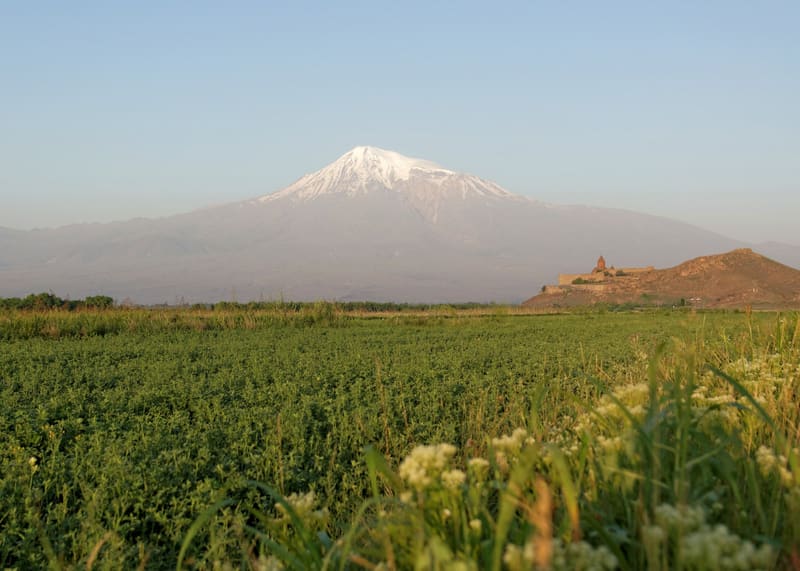
It should be possible to talk about Armenia without first having to explain where it is and who threatens it.
To write about a school because something is being learned there. A business because it makes a useful product. An artist because their work deserves to be seen.
Not just because all of this exists “despite the difficulties”.
The difficulties are real. But no one should have to overcome them to deserve our attention.
The people of Armenia deserve more than our admiration for their courage. They deserve a life that does not demand courage at every turn.
This week, Nikol Pashinyan raised the prospect of applying to join the European Union in 2027 or 2028. No application has yet been submitted. The prospect matters. It involves choices that belong first and foremost to Armenian citizens.
Behind this discussion are questions less spectacular than grand diplomatic strategies. What opportunities to study? What rules for running a business? What protection for everyone's rights? And what efforts will be required, for how long, to achieve what results?
Announcing a direction is not enough. What it changes for the people who will live with its consequences needs to be explained.
That is not asking politicians to solve every problem by tomorrow morning. It is asking them for answers people can rely on. A timetable. Resources. Commitments that can be checked.
The word “soon” has its uses. When it comes to signing a lease, though, it could do with being a little more precise.
The same standard applies to Turkey. Ararat Mirzoyan says the border could open “at any moment”. It remains closed.
Opening it would be a major change. But beyond the phrase, we still need to understand what it would make possible: what trade, what journeys, what activities? Who might benefit? What concerns need to be heard?
These questions do not diminish hope. They give it substance.
It should be possible to welcome a possibility without treating it as a certainty. And to ask questions without immediately being lumped in with those who refuse to believe in it.
Between applauding and despairing, there is still something very useful to do: look at what is happening.
In Yerevan, the third Global Armenian Summit is also bringing relations with the diaspora back to the fore. Pashinyan wants repatriation to become their “ultimate goal”, including in the draft of a new constitution.
Returning to live in Armenia can be a wonderful choice. It also needs to be a viable one.
Love for a country is no substitute for a job, a home or a school. “You'll love the people” makes you want to come. It is still a rather unusual supporting document for a loan application.
And what about the people who already live there?
Their future must not become an afterthought in a conversation about bringing others in. The quality of schools, access to healthcare, job opportunities and trust in the justice system matter to them first. Not just as a way to persuade a family to move.
The diaspora has a great deal to contribute. Provided it does not arrive with all the answers before hearing the questions.
You can love Armenia deeply from abroad and still know little about parts of life there. Acknowledging that does not weaken the bond. It makes it possible to listen better.
Residents must also be allowed to disagree. With one another. With the government. With the opposition. With what the diaspora expects of them.
A living country does not speak with just one voice. Its people are not extras in a story written somewhere else, even with the best intentions in the world.
Show nothing but crises, and everyday life eventually becomes invisible. Show nothing but landscapes and hospitality, and you risk making everything uncomfortable disappear.
Either way, the people are missing.
Not “the people” as a convenient phrase in the middle of a speech. Individuals with jobs, tastes, disagreements and wishes. Who can care about their history without wanting to talk about it every morning. Who have the right to think about their next exam rather than the next summit.
A young person who leaves does not necessarily love their country any less. A family that returns does not necessarily love it more. These choices are not a contest in devotion. They are people's lives, with their opportunities and constraints.
It must be possible to tell their stories without handing out marks for good and bad behaviour.
Barev World wants to make room for this Armenia. Without turning its people into perfect examples. Without requiring a success to prove that everything is fine, or a difficulty to sum up the whole country.
That takes time. Sources. Precise questions. Following the big announcements, then going back to see their effects. Taking an interest, too, in what does not naturally make a headline: a service that works, a project that moves forward, a problem that persists because no one is dealing with it.
Armenia deserves to be seen for itself. Not just for the place it holds in other people's strategies or in our memories.
Its people do not have to be extraordinary for their future to matter to us.
They must be able to make plans. And have good reason to believe they can fulfil them at home.
— Niels Minakian