Armenia bets on the Gulf: UAE deal ratified as Mirzoyan works the room in Manama
- Published
- Place
- Yerevan, Armenia, and Manama, Bahrain
- Event date
- Past event —
Summary
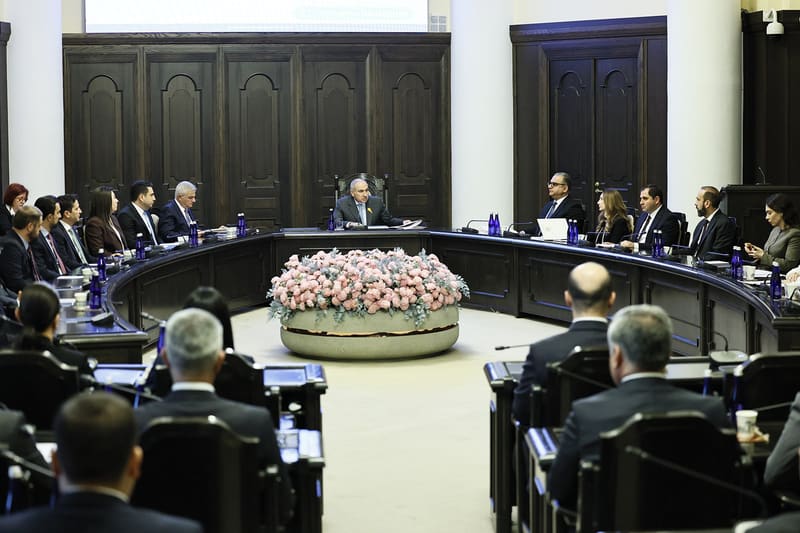
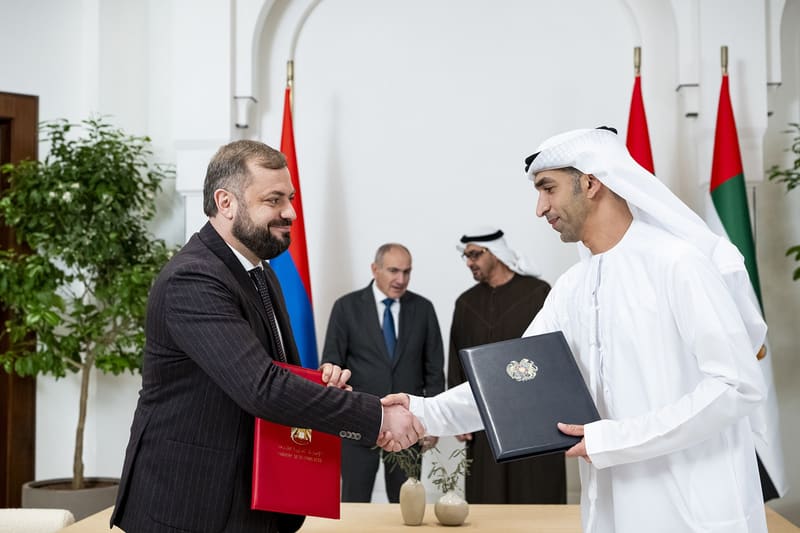
Armenia’s parliament on 28 October ratified, by 97 votes to none with one abstention, the agreement on trade in services and investment signed with the United Arab Emirates in Abu Dhabi on 5 February. According to Economy Minister Gevorg Papoyan, the UAE opens 122 service subsectors to Armenian companies, up from 32 under its WTO commitments, including IT, consulting, telecommunications, education and healthcare; Armenia’s own commitments rise from 102 to 127. On 31 October, on the sidelines of the Manama Dialogue in Bahrain, Foreign Minister Ararat Mirzoyan met his Bahraini counterpart Abdullatif bin Rashid Al Zayani, Lebanon’s Youssef Raggi and Gulf Cooperation Council Secretary-General Jasem Mohamed Albudaiwi.
Analysis
Meeting the Gulf Cooperation Council, with which a memorandum of understanding is being prepared, Ararat Mirzoyan described the region as a way to diversify Armenia’s foreign trade. He also promoted the “Crossroads of Peace” and the TRIPP route, ratified on the same day as the UAE agreement. On the Emirati side, the foreign trade minister cites a record $4.5 billion in non-oil trade in 2025 and says the UAE has overtaken Russia as Armenia’s leading foreign investor.
Possible consequences
The ratification law still has to be signed by Armenia’s president. With Bahrain, the two ministers discussed bilateral agreements under negotiation, tourism, investment and links between the Manama Dialogue and the Yerevan Dialogue. With Lebanon, home to a large Armenian community, talks covered trade, investment and artificial intelligence.
What remains uncertain
Existing sectoral restrictions remain, and the UAE keeps caps on foreign ownership in some sectors. No agreement was signed in Manama and no date has been set for the memorandum with the Gulf Cooperation Council. The trade and investment figures come solely from the Emirati minister.